PureVPN Review 2026: Is There a Catch to Its Low Prices?


More and more VPN services are reinventing themselves as all-in-one security apps, packing in extras alongside VPN protection. The name PureVPN suggests a focus on the essentials. But is the experience really as “pure” as it sounds?
We put PureVPN through its paces to find out why the name doesn’t quite match the product, and whether the service is still worth your money.


PureVPN* is a VPN service that encrypts your internet connection and hides your IP address. Founded in 2007, it’s one of the older names in the VPN market.
Despite its name, PureVPN isn’t “just” a VPN. It now includes a range of other security features, from a password manager to dark web monitoring.
PureVPN Review
Broad device support
PureVPN offers apps for nearly every major device and operating system. You can also set it up manually on routers without much trouble.Solid performance
PureVPN landed in the middle of the pack in our speed test. Overall, speed drops and added latency stayed within reasonable limits.Good for streaming
From Netflix and Hulu to the BBC and SRF, PureVPN bypassed most providers’ geo-restrictions in our streaming tests.Reliable support
PureVPN’s support team is available 24/7 via live chat. We consistently received quick help during our review, and customer reviews also praise its support.
Cluttered app
The VPN is just one of many features in the PureVPN app. All those extras, many of which cost extra to unlock, leave the interface feeling cluttered.Annoying upselling
PureVPN pushes you to upgrade your plan or buy paid add-ons at every turn. Even as a paying customer, you feel like you’ve bought an incomplete product.Confusing pricing
PureVPN’s pricing is hard to follow. There are multiple plans and subscription lengths, numerous upgrades, and artificially limited discounts designed to pressure you into signing up.Lack of transparency
The latest audit is several years old and fairly brief, the corporate structure is somewhat unclear, and the apps aren’t open source. PureVPN isn’t truly a “privacy-first” provider.
Ease of Use & Features
| Supported platforms |
| 3.5/3.5 |
| Supported protocols |
| 1.5/2.5 |
| Setup & operation |
| 2/7 |
| Advanced features |
| 2.5/5 |
| Add-ons |
| 1/2 |
PureVPN offers a solid set of VPN features and plenty of extras. Unfortunately, it increasingly uses its apps as a storefront for those extras. Even paying customers face pushy ads for paid add-ons in every available space.
Getting started: A maze of plans and upsells
Since PureVPN doesn’t offer a free trial, you’ll first need to choose a plan and pay for a subscription. Confusing pricing makes this more complicated than it needs to be.
PureVPN offers three plans, each with three subscription lengths. That makes nine combinations with different discounts and renewal prices. The provider also tries to sell you paid add-ons.
Make sure you choose the right plan for your needs and don’t add features you won’t use (more on pricing later).
Once you’ve subscribed and created an account, you can sign in to PureVPN’s web dashboard. The download page provides links to the available apps and setup guides:
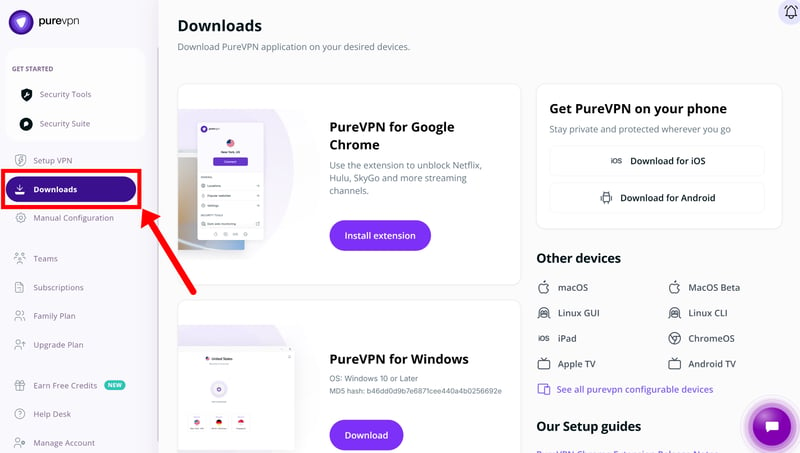
The download section lists all PureVPN apps.
Which devices does PureVPN support?
Device support is excellent: PureVPN covers all major platforms and operating systems, with manual setup options for routers and other devices.
To set up PureVPN manually on a router or another device, you can download OpenVPN and WireGuard configuration files from your account dashboard.
In short, you can use or set up PureVPN on just about any device:
 PureVPN |  Avast |  Bitdefender |  CyberGhost |  ExpressVPN |  hide.me |  HMA VPN |  Hotspot Shield |  IPVanish |  Mozilla VPN |  Mullvad |  NordVPN |  Norton |  PrivadoVPN |  Private Internet Access |  Proton VPN |  Surfshark |  TunnelBear |  VeePN |  VPN Unlimited |  Windscribe | |
|---|---|---|---|---|---|---|---|---|---|---|---|---|---|---|---|---|---|---|---|---|---|
| Desktop | |||||||||||||||||||||
Windows | ✓ | ✓ | ✓ | ✓ | ✓ | ✓ | ✓ | ✓ | ✓ | ✓ | ✓ | ✓ | ✓ | ✓ | ✓ | ✓ | ✓ | ✓ | ✓ | ✓ | ✓ |
Mac | ✓ | ✓ | ✓ | ✓ | ✓ | ✓ | ✓ | ✓ | ✓ | ✓ | ✓ | ✓ | ✓ | ✓ | ✓ | ✓ | ✓ | ✓ | ✓ | ✓ | ✓ |
Linux | ✓ | ✗ | ✗ | ✗ | ✓ | ✗ | ✗ | ✗ | ✓ | ✓ | ✓ | ✓ | ✗ | ✗ | ✓ | ✓ | ✓ | ✗ | ✗ | ✓ | ✓ |
| Mobile | |||||||||||||||||||||
Android | ✓ | ✓ | ✓ | ✓ | ✓ | ✓ | ✓ | ✓ | ✓ | ✓ | ✓ | ✓ | ✓ | ✓ | ✓ | ✓ | ✓ | ✓ | ✓ | ✓ | ✓ |
iOS | ✓ | ✓ | ✓ | ✓ | ✓ | ✓ | ✓ | ✓ | ✓ | ✓ | ✓ | ✓ | ✓ | ✓ | ✓ | ✓ | ✓ | ✓ | ✓ | ✓ | ✓ |
| Browser | |||||||||||||||||||||
Chrome | ✓ | ✓ | ✗ | ✓ | ✓ | ✓ | ✗ | ✓ | ✗ | ✗ | ✗ | ✓ | ✓ | ✓ | ✓ | ✓ | ✓ | ✓ | ✓ | ✓ | ✓ |
Edge | ✓ | ✓ | ✗ | ✗ | ✓ | ✓ | ✗ | ✗ | ✗ | ✗ | ✗ | ✓ | ✓ | ✓ | ✗ | ✓ | ✓ | ✓ | ✓ | ✓ | ✓ |
Firefox | ✓ | ✓ | ✗ | ✓ | ✓ | ✓ | ✗ | ✗ | ✗ | ✓ | ✗ | ✓ | ✓ | ✓ | ✓ | ✓ | ✓ | ✓ | ✓ | ✓ | ✓ |
| Streaming | |||||||||||||||||||||
Apple TV | ✓ | ✓ | ✗ | ✗ | ✓ | ✓ | ✗ | ✗ | ✓ | ✗ | ✗ | ✓ | ✓ | ✓ | ✓ | ✓ | ✓ | ✗ | ✗ | ✓ | ✓ |
Fire TV | ✓ | ✓ | ✗ | ✓ | ✓ | ✓ | ✗ | ✓ | ✓ | ✗ | ✓ | ✓ | ✓ | ✓ | ✓ | ✓ | ✓ | ✗ | ✓ | ✓ | ✓ |
Android TV | ✓ | ✓ | ✓ | ✓ | ✓ | ✓ | ✓ | ✓ | ✓ | ✗ | ✓ | ✓ | ✓ | ✓ | ✓ | ✓ | ✓ | ✗ | ✓ | ✓ | ✓ |
| Custom | |||||||||||||||||||||
OpenVPN config | ✓ | ✗ | ✗ | ✓ | ✓ | ✓ | ✗ | ✗ | ✓ | ✗ | ✗ | ✓ | ✗ | ✓ | ✓ | ✓ | ✓ | ✓ | ✓ | ✓ | ✓ |
WireGuard config | ✓ | ✗ | ✗ | ✗ | ✗ | ✓ | ✗ | ✗ | ✓ | ✗ | ✓ | ✗ | ✗ | ✓ | ✗ | ✓ | ✓ | ✗ | ✗ | ✓ | ✓ |
CLI | ✓ | ✗ | ✗ | ✓ | ✓ | ✓ | ✗ | ✗ | ✗ | ✗ | ✓ | ✓ | ✗ | ✗ | ✓ | ✓ | ✓ | ✗ | ✗ | ✗ | ✓ |
PureVPN’s interface: Less would be more
Choose a location, turn the VPN on, turn it off: That’s about all most people do with a VPN day to day. A minimalist interface makes perfect sense.
Despite its name, PureVPN takes a different approach, with underwhelming results. The interface is cluttered and distracting, with aggressive upselling at every turn.
The VPN section, which doubles as the home screen, is still fairly simple. It mainly consists of an on/off button and a link to the location picker. The navigation menu on the left takes you to PureVPN’s other features.
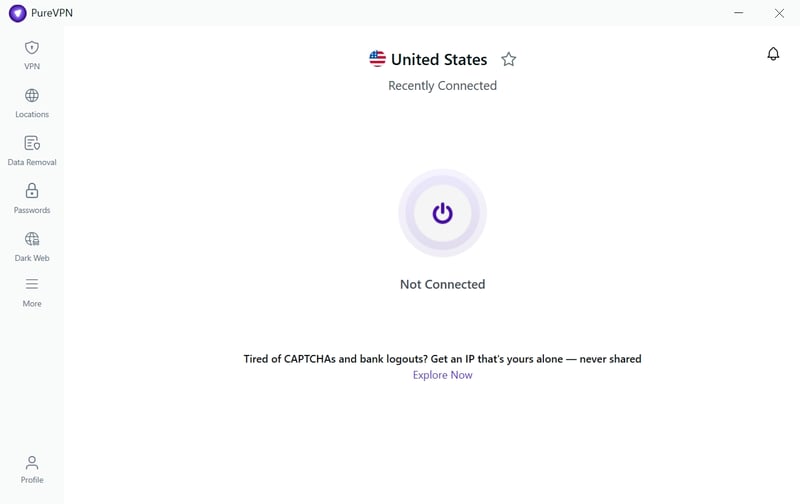
The VPN section of PureVPN’s app keeps things fairly simple.
Even here, though, PureVPN pushes paid upgrades. Right below the connection button, it promotes other features and PureVPN products, some of which cost extra.
The deeper you go into the app, the more aggressive the upselling becomes. An ad for dedicated IPs appears at the top of the location picker. You can dismiss it temporarily, but not permanently. The “Residential network” servers, available only as a paid add-on, also remain visible right at the top.
This makes the already crowded location menu even harder to navigate, despite its useful filters and specialized servers:
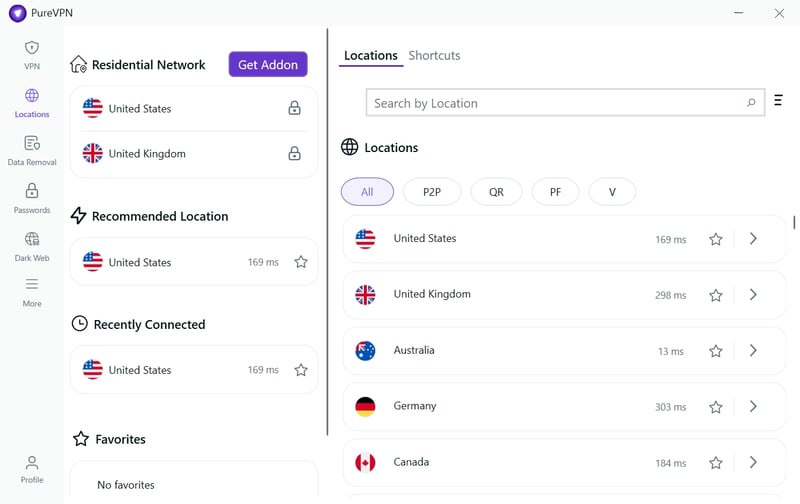
The location picker in PureVPN’s app.
Other menu items, such as the password manager, are only available on higher-tier plans. If you’ve subscribed to “just” the VPN, much of the app isn’t relevant to you. Even as a paying customer, you’re left feeling like you’ve bought an incomplete product and need to pay more to finish it.
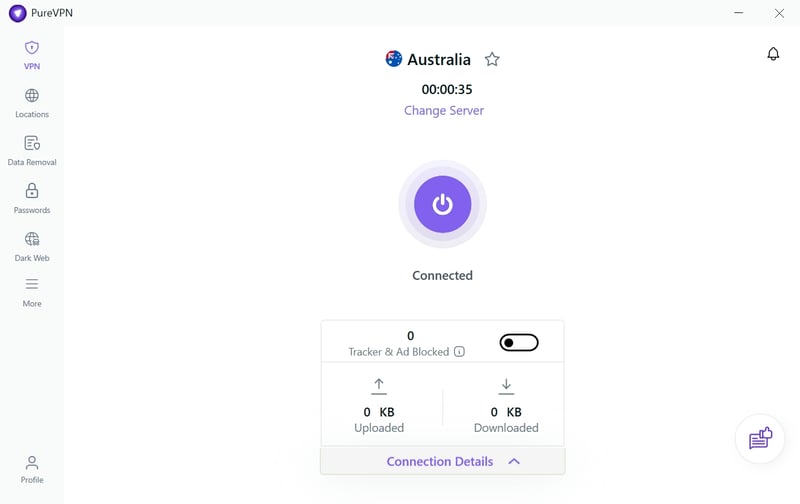
Once the VPN connects, the app displays connection stats.
PureVPN takes every opportunity to push paid extras on mobile, too. The location picker tries to sell us a team plan upgrade, and most entries in the main menu are paid add-ons.
Otherwise, PureVPN’s mobile app offers largely the same features and settings as its desktop version. It also adds an eSIM feature for buying mobile data plans to use abroad.

PureVPN’s smartphone app.
PureVPN seems more interested in selling extras than in giving users a smooth, straightforward experience, especially those cheapskates who only paid for the VPN.
Which VPN protocols does Proton VPN support?
PureVPN selects a protocol automatically by default, but you can also choose one manually in the settings. Options include WireGuard, OpenVPN, and IKEv2. That covers the main protocols used by most modern VPNs, though there’s no dedicated stealth protocol.
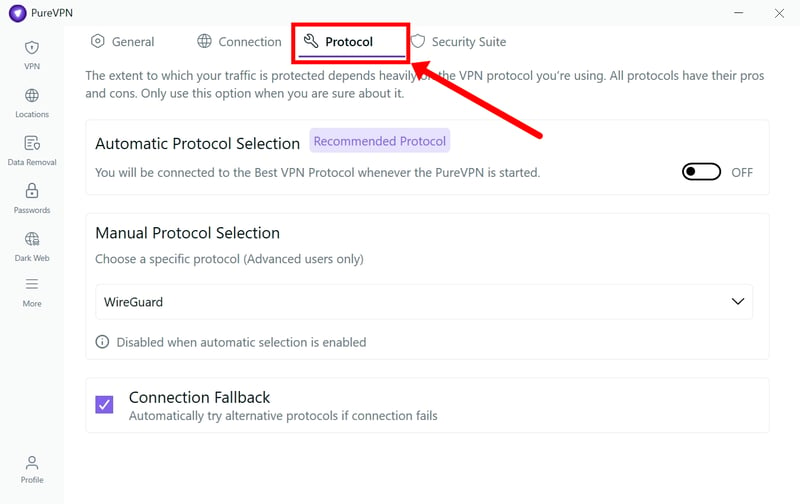
A VPN protocol is the set of rules used to establish a VPN connection. It determines how data travels between your device and the VPN server and how it’s encrypted. Protocols take different approaches, which can affect speed, security, and connection stability.
Most VPN users don’t need to worry about this, though. Services like PureVPN automatically select a suitable protocol for each connection.
Here’s a look at the protocols supported by the VPNs in our comparison:
PureVPN | Avast | Bitdefender | CyberGhost | ExpressVPN | hide.me | HMA VPN | Hotspot Shield | IPVanish | Mozilla VPN | Mullvad | NordVPN | Norton | PrivadoVPN | Private Internet Access | Proton VPN | Surfshark | TunnelBear | VeePN | VPN Unlimited | Windscribe | |
|---|---|---|---|---|---|---|---|---|---|---|---|---|---|---|---|---|---|---|---|---|---|
OpenVPN | ✓ | ✓ | ✓ | ✓ | ✓ | ✓ | ✓ | ✗ | ✓ | ✗ | ✗ | ✓ | ✓ | ✓ | ✓ | ✓ | ✓ | ✓ | ✓ | ✓ | ✓ |
WireGuard | ✓ | ✓ | ✓ | ✓ | ✓ | ✓ | ✓ | ✓ | ✓ | ✓ | ✓ | ✓ | ✓ | ✓ | ✓ | ✓ | ✓ | ✓ | ✓ | ✓ | ✓ |
IKEv2/IPsec | ✓ | ✗ | ✓ | ✓ | ✓ | ✓ | ✓ | ✓ | ✓ | ✗ | ✗ | ✗ | ✗ | ✓ | ✗ | ✓ | ✓ | ✓ | ✓ | ✓ | ✓ |
Proprietary | ✗ | ✓ | ✗ | ✗ | ✓ | ✗ | ✓ | ✓ | ✗ | ✗ | ✗ | ✓ | ✓ | ✗ | ✗ | ✓ | ✓ | ✗ | ✗ | ✓ | ✓ |
Stealth protocol | ✗ | ✓ | ✗ | ✗ | ✗ | ✓ | ✓ | ✗ | ✗ | ✗ | ✗ | ✓ | ✓ | ✗ | ✗ | ✓ | ✗ | ✗ | ✓ | ✓ | ✓ |
Advanced VPN features: A solid selection with some gaps
Setting paid add-ons aside, PureVPN offers a decent set of core features. All the essentials are included in the Standard plan.
Split tunneling is available, but only on Windows and Android, and only for apps, not domains or URLs. It lets you choose which apps use the VPN connection and which bypass it.
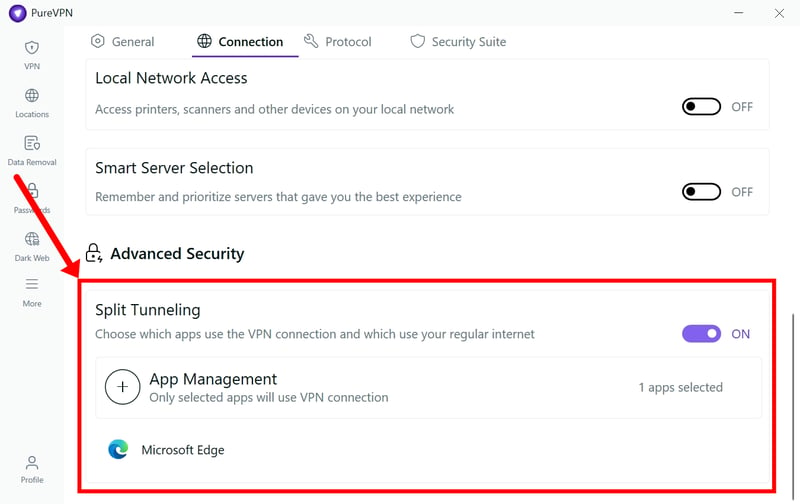
Split tunneling lets you limit the VPN connection to specific apps.
PureVPN also supports a few features you won’t find with every provider. One example is port forwarding, which lets you open specific ports for incoming connections. This can be useful for file sharing or accessing devices on your home network.
Dedicated IP addresses are available, but cost extra. There are no free static IPs. You also won’t find a double-hop feature, which routes traffic through two VPN servers, or automatic IP rotation.
So while PureVPN supports a few niche features, it leaves some gaps among the more common options:
PureVPN | Avast | Bitdefender | CyberGhost | ExpressVPN | hide.me | HMA VPN | Hotspot Shield | IPVanish | Mozilla VPN | Mullvad | NordVPN | Norton | PrivadoVPN | Private Internet Access | Proton VPN | Surfshark | TunnelBear | VeePN | VPN Unlimited | Windscribe | |
|---|---|---|---|---|---|---|---|---|---|---|---|---|---|---|---|---|---|---|---|---|---|
Double VPN | ✗ | ✓ | ✓ | ✗ | ✗ | ✓ | ✗ | ✗ | ✓ | ✓ | ✗ | ✓ | ✓ | ✓ | ✓ | ✓ | ✓ | ✗ | ✓ | ✗ | ✓ |
Static IP | ✗ | ✗ | ✗ | ✗ | ✗ | ✗ | ✗ | ✗ | ✗ | ✗ | ✗ | ✗ | ✗ | ✗ | ✗ | ✗ | ✓ | ✗ | ✓ | ✗ | ✓ |
Dedicated IP | ✓ | ✗ | ✗ | ✓ | ✓ | ✗ | ✗ | ✗ | ✗ | ✗ | ✗ | ✓ | ✗ | ✗ | ✓ | ✗ | ✗ | ✗ | ✗ | ✓ | ✗ |
Port forwarding | ✓ | ✗ | ✗ | ✗ | ✗ | ✓ | ✗ | ✗ | ✗ | ✗ | ✗ | ✓ | ✗ | ✗ | ✓ | ✓ | ✗ | ✗ | ✗ | ✗ | ✓ |
Tor access | ✓ | ✗ | ✗ | ✗ | ✓ | ✗ | ✗ | ✓ | ✗ | ✗ | ✗ | ✓ | ✗ | ✗ | ✓ | ✓ | ✓ | ✗ | ✗ | ✗ | ✓ |
Rotating IP address | ✗ | ✓ | ✗ | ✗ | ✓ | ✗ | ✗ | ✗ | ✗ | ✗ | ✗ | ✗ | ✓ | ✗ | ✗ | ✗ | ✓ | ✗ | ✗ | ✗ | ✓ |
Hidden servers | ✓ | ✗ | ✓ | ✗ | ✗ | ✗ | ✗ | ✓ | ✓ | ✗ | ✓ | ✓ | ✗ | ✓ | ✓ | ✗ | ✓ | ✓ | ✗ | ✗ | ✗ |
Smart DNS | ✗ | ✗ | ✗ | ✓ | ✓ | ✗ | ✗ | ✗ | ✗ | ✗ | ✗ | ✓ | ✗ | ✓ | ✓ | ✗ | ✗ | ✗ | ✓ | ✓ | ✗ |
| Split tunneling | |||||||||||||||||||||
Windows | ✓ | ✓ | ✓ | ✓ | ✓ | ✓ | ✗ | ✓ | ✓ | ✓ | ✓ | ✓ | ✓ | ✓ | ✓ | ✓ | ✓ | ✓ | ✓ | ✗ | ✓ |
macOS | ✗ | ✓ | ✓ | ✗ | ✓ | ✓ | ✗ | ✓ | ✓ | ✓ | ✓ | ✗ | ✓ | ✓ | ✓ | ✓ | ✓ | ✓ | ✗ | ✗ | ✓ |
Android | ✓ | ✓ | ✓ | ✓ | ✓ | ✓ | ✓ | ✓ | ✓ | ✓ | ✓ | ✓ | ✓ | ✓ | ✓ | ✓ | ✓ | ✓ | ✓ | ✓ | ✓ |
iOS | ✗ | ✗ | ✓ | ✗ | ✓ | ✗ | ✗ | ✓ | ✓ | ✗ | ✗ | ✗ | ✗ | ✓ | ✗ | ✗ | ✓ | ✓ | ✓ | ✗ | ✗ |
Other extras: Plenty of add-ons
There’s no shortage of extras here. In fact, the VPN almost feels like a secondary feature in PureVPN’s app. Most extras cost more or require a higher-tier plan. Only the tracker blocker, which blocks ads, malware, and tracking scripts, is included in the Standard plan:
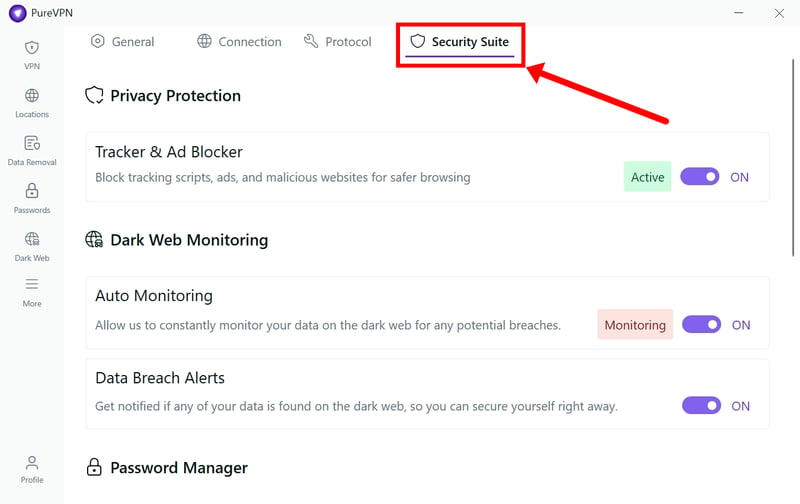
The security suite includes a tracker blocker.
The Plus plan adds a password manager for storing and managing your logins.
Dark web monitoring appears in every plan, but only unlocks with the Max plan. Until then, its section serves as yet another sales page, just as we’ve come to expect from PureVPN. It lists potential threats to scare you into upgrading. For example, it tells us we’re only “20% secure”:
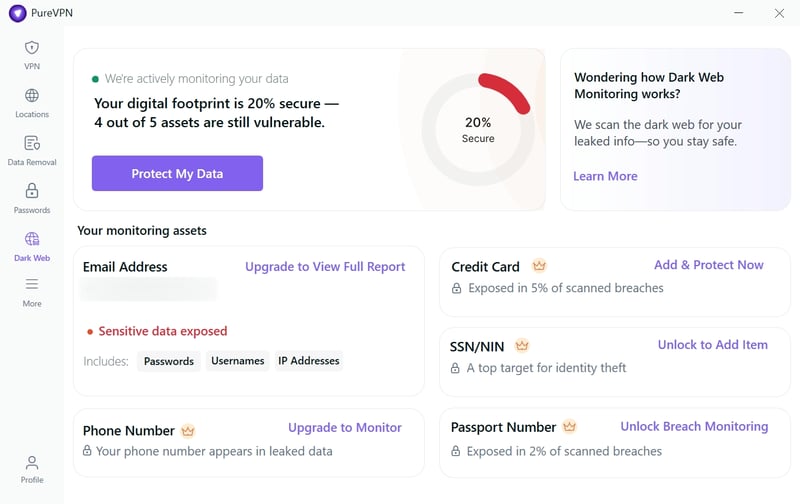
Selling fear: PureVPN promises to protect your data, for a little extra.
The Max plan also includes a data removal tool that lets you request the deletion of your personal information from data brokers. You also get a one-time eSIM package with 3 GB of data, valid for 30 days.
Still, a few features offered by some all-in-one VPNs are missing. There’s no full antivirus software or cloud storage, for example.
Here’s how PureVPN’s advanced features compare:
PureVPN | Avast | Bitdefender | CyberGhost | ExpressVPN | hide.me | HMA VPN | Hotspot Shield | IPVanish | Mozilla VPN | Mullvad | NordVPN | Norton | PrivadoVPN | Private Internet Access | Proton VPN | Surfshark | TunnelBear | VeePN | VPN Unlimited | Windscribe | |
|---|---|---|---|---|---|---|---|---|---|---|---|---|---|---|---|---|---|---|---|---|---|
Ad blocker | ✓ | ✓ | ✓ | ✓ | ✓ | ✓ | ✗ | ✗ | ✓ | ✓ | ✗ | ✓ | ✓ | ✓ | ✓ | ✓ | ✓ | ✓ | ✓ | ✗ | ✓ |
Phishing protection | ✗ | ✓ | ✓ | ✗ | ✓ | ✗ | ✗ | ✓ | ✓ | ✓ | ✗ | ✓ | ✓ | ✓ | ✓ | ✓ | ✓ | ✗ | ✓ | ✗ | ✓ |
Malware protection | ✓ | ✓ | ✓ | ✓ | ✓ | ✓ | ✗ | ✗ | ✓ | ✗ | ✗ | ✓ | ✓ | ✓ | ✓ | ✓ | ✓ | ✗ | ✓ | ✗ | ✓ |
Antivirus | ✗ | ✗ | ✓ | ✗ | ✗ | ✗ | ✗ | ✗ | ✗ | ✗ | ✗ | ✗ | ✗ | ✓ | ✓ | ✗ | ✓ | ✗ | ✗ | ✗ | ✗ |
Password manager | ✓ | ✗ | ✓ | ✗ | ✓ | ✗ | ✗ | ✗ | ✗ | ✗ | ✗ | ✓ | ✓ | ✗ | ✗ | ✓ | ✗ | ✗ | ✗ | ✓ | ✗ |
Cloud storage | ✗ | ✗ | ✗ | ✗ | ✗ | ✗ | ✗ | ✗ | ✓ | ✗ | ✗ | ✓ | ✓ | ✗ | ✗ | ✓ | ✗ | ✗ | ✗ | ✗ | ✗ |
Data leak monitoring | ✓ | ✗ | ✓ | ✓ | ✗ | ✗ | ✗ | ✗ | ✗ | ✗ | ✗ | ✓ | ✓ | ✗ | ✓ | ✓ | ✓ | ✗ | ✓ | ✓ | ✗ |
Scam call protection | ✗ | ✓ | ✗ | ✗ | ✗ | ✗ | ✗ | ✗ | ✗ | ✗ | ✗ | ✓ | ✗ | ✗ | ✗ | ✗ | ✗ | ✗ | ✗ | ✗ | ✗ |

At its core, PureVPN is a decent VPN with the essential features and support for nearly any device.
Unfortunately, the constant sales pitches make it hard to enjoy what’s there. PureVPN takes every opportunity to push more products on paying customers, making the app needlessly cumbersome to use. If you “just” need a VPN, look elsewhere.
Servers & Performance
| Server network |
| 5.5/10 |
| Performance |
| 7/15 |
| Streaming |
| 8/10 |
| Browsing |
| 4/5 |
PureVPN promises a “global network of servers” with “incredible speeds.” In practice, its performance is far less remarkable: The server selection is decent and speeds are solid, but PureVPN doesn’t lead the pack in any category.
How large is PureVPN’s server network?
PureVPN has servers in 94 countries, putting it comfortably in the middle of the providers we reviewed.
Its coverage follows a familiar pattern: Most servers are in North America and Europe, with fairly good coverage in Asia, too. There are far fewer options in South America, Africa, and the Middle East:
| Server locations | Number of countries | Europe | Americas | Asia-Pacific | Africa & Middle East | |
|---|---|---|---|---|---|---|
| 224 | 149 | 47 | 29 | 31 | 42 |
| 214 | 113 | 48 | 25 | 28 | 12 |
| 196 | 149 | 48 | 25 | 32 | 44 |
| 170 | 104 | 45 | 20 | 26 | 13 |
| 150 | 113 | 44 | 30 | 28 | 13 |
| 145 | 103 | 45 | 15 | 23 | 20 |
| 142 | 100 | 46 | 18 | 27 | 9 |
| 141 | 110 | 47 | 27 | 24 | 11 |
| 135 | 71 | 38 | 14 | 14 | 5 |
| 125 | 100 | 45 | 18 | 25 | 12 |
| 124 | 85 | 42 | 15 | 23 | 5 |
| 123 | 91 | 40 | 16 | 21 | 14 |
| 121 | 94 | 43 | 22 | 21 | 8 |
| 116 | 74 | 34 | 12 | 17 | 11 |
| 106 | 65 | 36 | 11 | 13 | 5 |
| 92 | 57 | 31 | 8 | 14 | 4 |
| 91 | 50 | 30 | 8 | 9 | 3 |
| 91 | 50 | 30 | 8 | 9 | 3 |
| 66 | 49 | 28 | 5 | 15 | 1 |
| 60 | 47 | 27 | 8 | 9 | 3 |
| 53 | 39 | 22 | 5 | 7 | 5 |
Not all of these servers are physically located in the country listed. PureVPN uses virtual servers for around 40 locations. These servers are in a different country but still assign you an IP address from the country you selected.
Virtual servers are common among VPNs, especially for countries with limited infrastructure. What matters is that they’re clearly labeled. PureVPN doesn’t label them in its server list, but it does offer a filter that shows all virtual locations.
PureVPN doesn’t use RAM-only servers. A growing number of VPN providers use this server type for its potential privacy benefits: Data is stored only in temporary memory and automatically erased when the server restarts.
Like Proton VPN, PureVPN doesn’t consider this necessary. It argues that full-disk encryption provides the same level of protection, and a no-logs VPN shouldn’t have any valuable usage data to retrieve anyway.
Speed test: How fast is PureVPN?
Server speed matters more than server count. Here, too, PureVPN lands in the middle of the pack. Routing traffic through its VPN servers noticeably affects speeds and latency, but the slowdown stays within the range you’d expect from a VPN.
We test every provider under the same conditions to keep our performance measurements as fair and comparable as possible. We use a Windows 11 test system with a 1 Gbps internet connection in Germany and leave each VPN’s settings at their defaults.
We use Ookla’s Speedtest to measure speeds at five locations: Frankfurt, New York, London, Tokyo, and Sydney. For each location, we connect to a VPN server in that country and use the same local Speedtest server for every test.
We measure three things:
- 1.
Download speed: How fast do files download while connected to the VPN?
- 2.
Upload speed: How fast do files upload while connected to the VPN?
- 3.
Latency: How much does the VPN increase the connection’s response time?
We take each measurement first without the VPN, then with it. We repeat this on five separate days, for a total of 25 comparisons per provider. This shows us how much the VPN slows down the connection.
Important: These results reflect our test conditions. Speeds may vary depending on your internet connection, server, and VPN protocol. Small differences between providers don’t necessarily tell you much.
Here’s a closer look at PureVPN’s performance results:
Percentage drop in download speed while connected to the VPN
| Without a VPN | With a VPN | Download speed loss | |
|---|---|---|---|
| 823 Mbit/s | 720 Mbit/s | 12.5 % |
| 821 Mbit/s | 667 Mbit/s | 18.8 % |
| 820 Mbit/s | 659 Mbit/s | 19.6 % |
| 821 Mbit/s | 610 Mbit/s | 25.7 % |
| 815 Mbit/s | 582 Mbit/s | 28.6 % |
| 823 Mbit/s | 569 Mbit/s | 30.9 % |
| 820 Mbit/s | 551 Mbit/s | 32.8 % |
| 823 Mbit/s | 546 Mbit/s | 33.7 % |
| 818 Mbit/s | 541 Mbit/s | 33.9 % |
| 824 Mbit/s | 540 Mbit/s | 34.5 % |
| 824 Mbit/s | 535 Mbit/s | 35.1 % |
| 821 Mbit/s | 530 Mbit/s | 35.4 % |
| 825 Mbit/s | 524 Mbit/s | 36.5 % |
| 816 Mbit/s | 477 Mbit/s | 41.5 % |
| 823 Mbit/s | 460 Mbit/s | 44.1 % |
| 820 Mbit/s | 451 Mbit/s | 45 % |
| 815 Mbit/s | 297 Mbit/s | 63.6 % |
| 823 Mbit/s | 259 Mbit/s | 68.5 % |
| 828 Mbit/s | 233 Mbit/s | 71.9 % |
| 811 Mbit/s | 176 Mbit/s | 78.3 % |
| 824 Mbit/s | 157 Mbit/s | 80.9 % |
PureVPN lands squarely in the middle of the pack for downloads. Its roughly 35% speed drop puts it on par with many other VPNs, including NordVPN, Windscribe, Surfshark, and ProtonVPN. That doesn’t make PureVPN a frontrunner, but it’s in good company. Slowdowns of this size are normal when using a VPN.
Percentage drop in upload speed while connected to the VPN
| Without a VPN | With a VPN | Upload speed loss | |
|---|---|---|---|
| 749 Mbit/s | 683 Mbit/s | 8.8 % |
| 756 Mbit/s | 685 Mbit/s | 9.4 % |
| 745 Mbit/s | 659 Mbit/s | 11.5 % |
| 755 Mbit/s | 666 Mbit/s | 11.8 % |
| 743 Mbit/s | 653 Mbit/s | 12.1 % |
| 751 Mbit/s | 654 Mbit/s | 12.9 % |
| 757 Mbit/s | 650 Mbit/s | 14.1 % |
| 752 Mbit/s | 644 Mbit/s | 14.4 % |
| 752 Mbit/s | 639 Mbit/s | 15 % |
| 750 Mbit/s | 634 Mbit/s | 15.5 % |
| 753 Mbit/s | 605 Mbit/s | 19.7 % |
| 760 Mbit/s | 609 Mbit/s | 19.9 % |
| 753 Mbit/s | 578 Mbit/s | 23.2 % |
| 769 Mbit/s | 589 Mbit/s | 23.4 % |
| 746 Mbit/s | 564 Mbit/s | 24.4 % |
| 757 Mbit/s | 559 Mbit/s | 26.2 % |
| 742 Mbit/s | 530 Mbit/s | 28.6 % |
| 750 Mbit/s | 392 Mbit/s | 47.7 % |
| 755 Mbit/s | 126 Mbit/s | 83.3 % |
| 718 Mbit/s | 91 Mbit/s | 87.3 % |
| 752 Mbit/s | 89 Mbit/s | 88.2 % |
Uploads tell a similar story. With an average speed drop of around 23%, PureVPN again sits in the middle of the pack. Some VPNs slow uploads down far less, while others take a bigger toll.
Additional delay caused by the VPN
| Without a VPN | With a VPN | Extra latency | |
|---|---|---|---|
| 135 ms | 125 ms | 0 ms |
| 134 ms | 127 ms | 0 ms |
| 129 ms | 129 ms | 0 ms |
| 132 ms | 130 ms | 0 ms |
| 130 ms | 132 ms | 2 ms |
| 132 ms | 135 ms | 3 ms |
| 131 ms | 134 ms | 3 ms |
| 131 ms | 135 ms | 4 ms |
| 131 ms | 136 ms | 5 ms |
| 131 ms | 137 ms | 6 ms |
| 131 ms | 138 ms | 7 ms |
| 131 ms | 141 ms | 10 ms |
| 131 ms | 141 ms | 10 ms |
| 131 ms | 142 ms | 11 ms |
| 127 ms | 138 ms | 11 ms |
| 131 ms | 144 ms | 13 ms |
| 131 ms | 146 ms | 15 ms |
| 129 ms | 145 ms | 16 ms |
| 133 ms | 151 ms | 18 ms |
| 131 ms | 155 ms | 24 ms |
| 131 ms | 170 ms | 39 ms |
PureVPN also delivers average results in our ping test. With 10 milliseconds of added latency, it’s neither one of the fastest nor one of the slowest VPNs.
Measurements are a useful guide, but they never tell the whole story. Since we collect them under controlled test conditions, we also check how the VPN connection feels in everyday use.
We were fairly happy here. PureVPN connected quickly and kept connections stable. Switching between servers was the only thing that took a little longer than expected.
Speeds felt decent in everyday use, especially on the fastest available server. We also didn’t run into annoying VPN side effects, such as frequent CAPTCHAs or websites loading the wrong regional version.
Streaming test: How well does PureVPN bypass geo-blocking?
To test each VPN’s streaming capabilities, we pick a title on each streaming service that’s available only in a specific country’s library. We then try to unblock it seven times, on seven different days. The more often it works, the more reliable the VPN is for streaming.
Here are PureVPN’s results:
PureVPN | Avast | Bitdefender | CyberGhost | ExpressVPN | hide.me | HMA VPN | Hotspot Shield | IPVanish | Mozilla VPN | Mullvad | NordVPN | Norton | PrivadoVPN | Private Internet Access | Proton VPN | Surfshark | TunnelBear | VeePN | VPN Unlimited | Windscribe | |
|---|---|---|---|---|---|---|---|---|---|---|---|---|---|---|---|---|---|---|---|---|---|
Netflix | 5/7 | 2/7 | 0/7 | 5/7 | 1/7 | 6/7 | 4/7 | 3/7 | 0/7 | 0/7 | 3/7 | 7/7 | 3/7 | 4/7 | 2/7 | 7/7 | 3/7 | 2/7 | 1/7 | 0/7 | 7/7 |
Prime Video | 7/7 | 7/7 | 7/7 | 4/7 | 7/7 | 0/7 | 7/7 | 7/7 | 6/7 | 0/7 | 1/7 | 7/7 | 7/7 | 6/7 | 7/7 | 7/7 | 7/7 | 1/7 | 0/7 | 0/7 | 7/7 |
Disney+ | 7/7 | 4/7 | 7/7 | 2/7 | 7/7 | 0/7 | 7/7 | 3/7 | 6/7 | 0/7 | 0/7 | 7/7 | 7/7 | 4/7 | 7/7 | 7/7 | 7/7 | 0/7 | 0/7 | 0/7 | 7/7 |
Hulu | 7/7 | 7/7 | 7/7 | 2/7 | 7/7 | 0/7 | 7/7 | 7/7 | 7/7 | 0/7 | 0/7 | 7/7 | 7/7 | 7/7 | 7/7 | 7/7 | 7/7 | 0/7 | 0/7 | 1/7 | 6/7 |
ARD | 3/7 | 7/7 | 7/7 | 7/7 | 7/7 | 7/7 | 7/7 | 7/7 | 7/7 | 7/7 | 7/7 | 7/7 | 7/7 | 0/7 | 7/7 | 7/7 | 7/7 | 7/7 | 7/7 | 7/7 | 7/7 |
BBC iPlayer | 7/7 | 7/7 | 6/7 | 4/7 | 7/7 | 0/7 | 7/7 | 7/7 | 6/7 | 3/7 | 3/7 | 7/7 | 6/7 | 5/7 | 7/7 | 7/7 | 6/7 | 2/7 | 0/7 | 0/7 | 7/7 |
RaiPlay | 7/7 | 7/7 | 7/7 | 2/7 | 7/7 | 0/7 | 7/7 | 7/7 | 7/7 | 0/7 | 0/7 | 7/7 | 7/7 | 7/7 | 6/7 | 7/7 | 7/7 | 3/7 | 2/7 | 0/7 | 7/7 |
france.tv | 7/7 | 7/7 | 3/7 | 7/7 | 7/7 | 7/7 | 7/7 | 7/7 | 0/7 | 3/7 | 6/7 | 7/7 | 7/7 | 0/7 | 7/7 | 7/7 | 7/7 | 7/7 | 4/7 | 7/7 | 2/7 |
ORF | 0/7 | 7/7 | 0/7 | 4/7 | 7/7 | 0/7 | 5/7 | 6/7 | 0/7 | 0/7 | 1/7 | 7/7 | 5/7 | 6/7 | 7/7 | 7/7 | 7/7 | 0/7 | 0/7 | 0/7 | 5/7 |
SRF | 7/7 | 7/7 | 7/7 | 7/7 | 7/7 | 7/7 | 7/7 | 6/7 | 7/7 | 6/7 | 6/7 | 7/7 | 7/7 | 6/7 | 7/7 | 7/7 | 7/7 | 6/7 | 7/7 | 6/7 | 7/7 |
PureVPN did a good job of unblocking streaming content from other countries. We bypassed the geo-restrictions on most international streaming services without any trouble.
Keep in mind that these results can change at any time. Streaming services and VPNs are locked in a constant game of cat and mouse. Just because a service works with PureVPN today doesn’t mean it will work tomorrow.
PureVPN’s performance is solid, but nothing more. Its server network is average in size, and its connection speeds are average, too.
PureVPN was fairly reliable for streaming in our tests, though some competitors did better. Overall, it doesn’t stand out here, for better or worse.
Security & Privacy
| Jurisdiction | British Virgin Islands | 3/3 |
| Audits & transparency |
| 1.5/4 |
| VPN leak tests | No leaks found in our review | 3/3 |
| Anonymous registration |
| 0.5/2 |
| Credibility & track record |
| 3/8 |
A good VPN needs to keep your browsing activity private, even from the VPN provider itself. PureVPN offers solid security features, but it could do more to earn users’ trust.
Technical standards and security features
PureVPN uses proven security standards common in the VPN industry. It supports modern VPN protocols, including WireGuard and OpenVPN, and uses state-of-the-art encryption to protect your traffic from prying eyes.
There’s also a kill switch, which automatically cuts your internet connection if the VPN tunnel drops unexpectedly. This prevents you from unknowingly browsing with your real IP address exposed. It worked well in our stress test, too (more on that shortly).
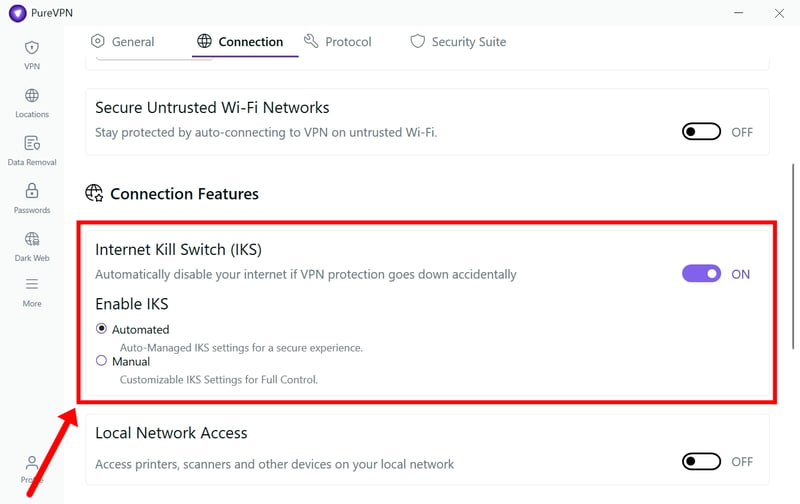
The kill switch cuts your internet connection if the VPN runs into trouble.
PureVPN has a trust center that explains its security measures in some detail. However, technical specifics are limited, and PureVPN isn’t open source. That makes its security harder to assess than that of open-source VPNs like Proton VPN or Private Internet Access.
Leak tests: Does PureVPN’s protection hold up in practice?
A VPN’s main job is to hide your real IP address and protect your traffic. PureVPN did both reliably in our tests, under normal conditions and during our kill switch stress test.
We found no DNS, IPv6, or WebRTC leaks during our leak tests. PureVPN consistently kept our real IP address hidden.
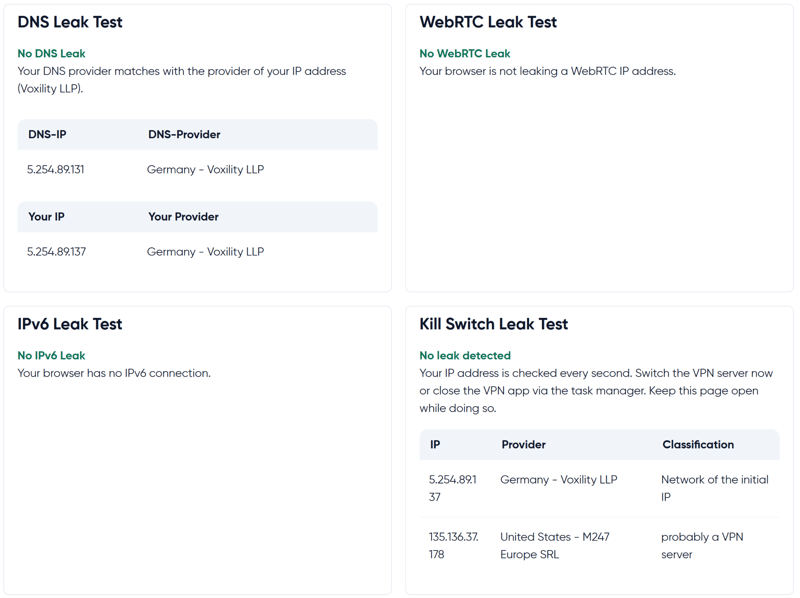
PureVPN passed all our leak tests.
We stayed protected even when connections failed. PureVPN’s kill switch reliably stepped in during both server switches and an app crash we deliberately triggered. That crash test tripped up many other providers in our comparison.
Which VPN services reliably protect your data?
PureVPN | Avast | Bitdefender | CyberGhost | ExpressVPN | hide.me | HMA VPN | Hotspot Shield | IPVanish | Mozilla VPN | Mullvad | NordVPN | Norton | PrivadoVPN | Private Internet Access | Proton VPN | Surfshark | TunnelBear | VeePN | VPN Unlimited | Windscribe | |
|---|---|---|---|---|---|---|---|---|---|---|---|---|---|---|---|---|---|---|---|---|---|
DNS | ✓ | ✓ | ✓ | ✗ | ✓ | ✓ | ✓ | ✓ | ✓ | ✓ | ✓ | ✓ | ✓ | ✓ | ✓ | ✓ | ✓ | ✓ | ✓ | ✓ | ✓ |
IPv6 | ✓ | ✓ | ✓ | ✗ | ✓ | ✓ | ✓ | ✓ | ✓ | ✓ | ✓ | ✓ | ✓ | ✓ | ✓ | ✓ | ✓ | ✓ | ✓ | ✓ | ✓ |
WebRTC | ✓ | ✓ | ✓ | ✗ | ✓ | ✓ | ✓ | ✓ | ✓ | ✓ | ✓ | ✓ | ✓ | ✓ | ✓ | ✓ | ✓ | ✓ | ✓ | ✓ | ✓ |
Server switch (kill switch) | ✓ | ✓ | ✓ | ✓ | ✓ | ✓ | ✓ | ✓ | ✓ | ✓ | ✓ | ✓ | ✓ | ✓ | ✓ | ✓ | ✓ | ✓ | ✓ | ✓ | ✓ |
App crash (kill switch) | ✓ | ✗ | ✗ | ✓ | ✗ | ✗ | ✗ | ✗ | ✗ | ✗ | ✓ | ✓ | ✗ | ✗ | ✗ | ✓ | ✓ | ✗ | ✗ | ✓ | ✓ |
How trustworthy is PureVPN?
PureVPN has strong security standards and reliably shields your IP address and other sensitive data from prying eyes. But what about the provider itself? VPN services occupy a sensitive position: in theory, they could collect private data about your online activity.
That’s why almost every modern VPN service promises not to keep logs that could identify you. But you should never take those promises at face value. It’s worth looking closely at who runs the VPN and how transparent they are about their business practices and privacy measures.
Here are the key facts about PureVPN:
PureVPN is run by GZ Systems, a company founded in 2007. It belongs to the PureSquare family of brands, which offers other security and privacy products alongside its VPN services. Co-founder Uzair Gadit still serves as CEO, but little else is known about the people behind the company. There’s no team section on the website, and the ownership structure is also unclear.
PureVPN isn’t owned by a large, publicly traded security company, but it’s not an independent, privacy-focused VPN project like Mullvad either.
The company is legally based in the British Virgin Islands. Originally based in Hong Kong, PureVPN moved its legal headquarters to the Caribbean islands in 2021. There’s no general requirement there to retain VPN usage data.
PureVPN describes itself as a no-logs VPN. According to its privacy policy, it doesn’t store browsing histories, original IP addresses, DNS queries, or exact connection times.
However, it does process account details, the day you connect, information about your internet provider, and app usage statistics. Certain add-on features have additional exceptions. If you enable the ad blocker, for example, PureVPN records the domains you visit while connected. PureVPN doesn’t minimize data collection as strictly as some privacy-first providers.
Yes, but the audits could be more transparent, broader in scope, and more frequent. At the time of our review, the latest no-logs audit was from 2023 and had been conducted by KPMG. It’s not easy to find, though: there’s no link to it in the trust center, for example. To receive a summary by email, you need to fill out a form on the no-logs page.
The report is just one page long. It only confirms that PureVPN met four specific promises in its no-logs policy “at the conclusion of the audit.” It’s also puzzling how vague PureVPN is about who conducts its audits. On its website, the provider often refers to a “top auditor” or a “well-known audit firm” rather than naming them.
There are also no security audits of its technical infrastructure. Other no-logs VPNs that commit to audits go much further here.
Yes, PureVPN has a trust center that brings together information on its security standards, privacy practices, and transparency. It offers plenty of useful details, but some expected information is missing. You can’t download audit reports, for example, and it doesn’t even say when the audits took place or who performed them.
There is one major scandal in the company’s history: In 2017, PureVPN helped the FBI identify a suspected cyberstalker. The provider shared connection data that linked the user to specific IP addresses.
This drew heavy criticism because PureVPN was already advertising a no-logs policy. However, the provider had never explicitly claimed it stored no connection data at all. Depending on your interpretation, sharing that data was also consistent with its privacy policy at the time.
PureVPN has since updated its privacy policy and introduced independent audits. Still, privacy purists remain somewhat skeptical of the brand.
It’s a mixed bag. PureVPN doesn’t make wildly exaggerated claims, but it does oversimplify VPN benefits, such as the promise of “private browsing.” The app also stirs up some unnecessary fear, for example through the security score in its dark web monitoring feature.
Not entirely: PureVPN requires an email address to sign up. It does, however, accept cryptocurrency payments, including Bitcoin.
Here are the key facts about PureVPN’s security:
PureVPN | Avast | Bitdefender | CyberGhost | ExpressVPN | hide.me | HMA VPN | Hotspot Shield | IPVanish | Mozilla VPN | Mullvad | NordVPN | Norton | PrivadoVPN | Private Internet Access | Proton VPN | Surfshark | TunnelBear | VeePN | VPN Unlimited | Windscribe | |
|---|---|---|---|---|---|---|---|---|---|---|---|---|---|---|---|---|---|---|---|---|---|
Owner | PureSquare | Gen Digital | Bitdefender SRL | Kape Technologies | Kape Technologies | eVenture Ltd | Gen Digital | Point Wild | Ziff Davis | Mozilla | Amagicom AB | Nord Security | Gen Digital | Privado Networks ehf | Kape Technologies | Proton AG | Nord Security | McAfee Corp. | VeePN Corp | KeepSolid Inc. | Windscribe |
Jurisdiction | British Virgin Islands | Czechia | Romania | Romania | British Virgin Islands | Malaysia | Czechia | US | US | US | Sweden | Panama | US | Iceland | US | Switzerland | Netherlands | Canada | Panama | US | Canada |
Intelligence alliance | none | none | none | none | none | none | 5 Eyes | 5 Eyes | 5 Eyes | 5 Eyes | 14 Eyes | none | 5 Eyes | none | 5 Eyes | none | 9 Eyes | 5 Eyes | none | 5 Eyes | 5 Eyes |
Latest no-log review | 2023 | no review | no review | 2025 | 2025 | 2024 | 2020 | no review | 2025 | no review | 2023 | 2026 | 2025 | no review | 2025 | 2026 | 2025 | no review | no review | no review | no review |
Latest security review | no review | no review | no review | 2025 | 2026 | 2023 | no review | no review | no review | 2023 | 2026 | 2025 | no review | no review | no review | no review | 2026 | 2024 | 2021 | no review | 2024 |
Latest transparency report | 2026 | 2025 | no report | 2026 | 2026 | 2025 | no report | no report | 2026 | 2025 | no report | 2026 | 2025 | no report | 2026 | 2026 | 2026 | 2023 | no report | no report | 2026 |
Open-source | ✗ | ✗ | ✗ | ✗ | ✗ | ✗ | ✗ | ✗ | ✗ | ✓ | ✓ | ✗ | ✗ | ✗ | ✓ | ✓ | ✗ | ✗ | ✗ | ✗ | ✓ |
Anonymous sign-up | ✗ | ✗ | ✗ | ✗ | ✗ | ✗ | ✗ | ✗ | ✗ | ✗ | ✓ | ✗ | ✗ | ✗ | ✗ | ✗ | ✗ | ✗ | ✗ | ✗ | ✓ |
Cryptocurrency payments | ✓ | ✗ | ✗ | ✓ | ✗ | ✓ | ✗ | ✗ | ✗ | ✗ | ✓ | ✓ | ✗ | ✓ | ✗ | ✓ | ✓ | ✗ | ✗ | ✓ | ✓ |
Cash payments | ✗ | ✗ | ✗ | ✗ | ✗ | ✗ | ✗ | ✗ | ✗ | ✗ | ✓ | ✗ | ✗ | ✗ | ✗ | ✓ | ✗ | ✗ | ✗ | ✗ | ✓ |
On the technical side, there’s little to criticize. PureVPN uses modern security standards and passed every one of our leak tests. It even passed our kill switch stress test, which tripped up many VPNs in our comparison.
But PureVPN could do more to build trust, especially as a provider that has been caught sharing user data. Transparency is lacking, its apps are closed-source, and audits are irregular and offer limited insight. Its pushy sales tactics don’t help its credibility either.
Support
| Documentation |
| 1.5/2 |
| Support channels |
| 1.5/2 |
| Speed and quality |
| 2/3 |
| Ratings on review sites |
| 1.5/3 |
Good support comes down to two things: a well-organized help center with step-by-step guides and answers to common questions, and reliable customer service that provides prompt, personal help when needed. PureVPN does fairly well on both fronts.
Well-organized help center, but English only
PureVPN’s support section makes a good impression. It’s easy to find and neatly organized into categories and subcategories. The setup guides cover all supported devices and operating systems, with step-by-step instructions and up-to-date screenshots.
There’s also a troubleshooting section, billing help, and FAQs. A learning center covers more general VPN topics. Overall, the documentation is solid, though it’s only available in English.
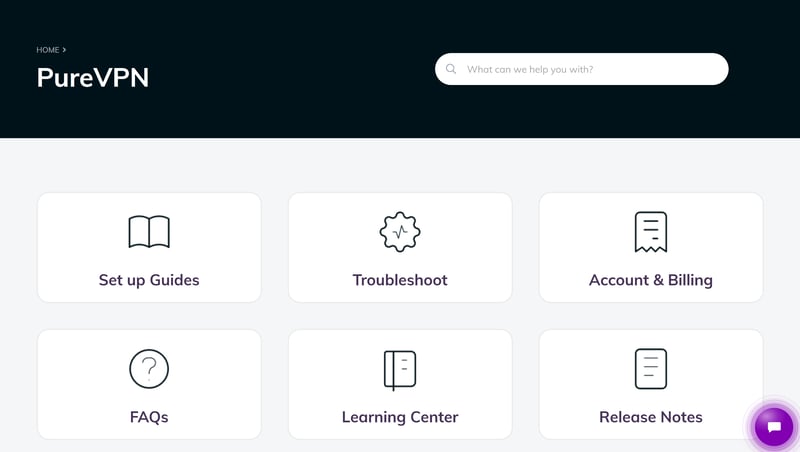
PureVPN’s support section.
Direct support via chat and email
PureVPN promises personal support 24/7. The fastest option is live chat, available directly on its website. A chatbot greets you first. It’s not the smartest bot around and offers fairly generic answers, but it quickly connects you with a real person on request.
We usually reached someone in under a minute. The support agents made an effort to answer our questions and were quick to help with straightforward issues.
What do customers say about PureVPN’s support?
Of course, our experience is just one of many. To avoid basing our rating on a single snapshot, we also check review sites like Trustpilot.
Many reviewers praise the support team, particularly for providing fast, reliable help through live chat. There’s criticism, too, mostly about billing questions or more serious technical issues that support couldn’t (or wouldn’t) resolve.
PureVPN’s support was a pleasant surprise. Its extensive help center answers nearly all the key questions, and live chat connects us with personal help quickly. Customer reviews also paint a fairly positive picture of its support.
We’ve seen worse from other VPNs. Still, even with PureVPN, you may struggle to get help with complex technical problems or billing questions.
Costs
| Free version | No | 0/1 |
| Cheapest plan | $2.43 | 2/3 |
| Flexible plan | $12.95 | 0/2 |
| Money-back guarantee | 31 days | 1/1 |
| Fair pricing |
| 0/3 |
VPN providers often use complicated subscription plans and confusing discounts to make their prices look as appealing as possible. PureVPN’s pricing is hard to follow even by VPN standards.
PureVPN plans: 3 tiers, 3 subscription lengths, and plenty of add-ons
There are three plans, each available with three subscription lengths, plus plenty of paid extras and constantly changing discounts.
The Standard plan is the VPN-only option. It includes the VPN with all its core features, plus an ad and tracker blocker.
The Plus plan adds a password manager.
The Max plan also includes dark web monitoring and a data removal tool, plus an eSIM valid for 30 days.
Other features, such as dedicated IP addresses, port forwarding, and additional logins, are available as paid add-ons. Some are also sold in bundles.
Prices for both plans and add-ons depend on your subscription length. Annual and two-year subscriptions offer steep discounts compared to the fairly unappealing monthly rate.
Here’s an overview of PureVPN’s plans:
| Standard | Plus | Max | |
|---|---|---|---|
| Monthly price | from $2.43 | from $3.07 | from $3.99 |
| Contract period (months) | 1 - 24 | 1 - 24 | 1 - 24 |
| Limits | |||
| Devices | 10 | 10 | 30 |
| Data volume | unlimited | unlimited | unlimited |
| Number of countries | 93 | 93 | 93 |
| Features | |||
| Streaming allowed | ✓ | ✓ | ✓ |
| P2P allowed | ✓ | ✓ | ✓ |
| Tor access | ✓ | ✓ | ✓ |
| Double VPN | ✗ | ✗ | ✗ |
| Dedicated IP | ✗ | ✗ | ✗ |
| Add-ons | |||
| Ad blocker | ✓ | ✓ | ✓ |
| Phishing protection | ✗ | ✗ | ✗ |
| Malware protection | ✓ | ✓ | ✓ |
| Antivirus | ✗ | ✗ | ✗ |
| Password manager | ✗ | ✓ | ✓ |
| Cloud storage | ✗ | ✗ | ✗ |
| Data leak monitoring | ✗ | ✗ | ✓ |
| Scam call protection | ✗ | ✗ | ✗ |
How PureVPN’s pricing compares
PureVPN is either one of the cheapest or one of the most expensive VPNs in our comparison, depending on the plan you choose. The two-year Standard plan is a particularly good deal. Only PrivadoVPN and Private Internet Access cost slightly less.
The month-to-month plan, however, is among the most expensive we reviewed. If you don’t want a long-term commitment, other providers offer much better deals:
| Free version available | Lowest-cost plan | Flexible plan | Money-back guarantee (days) | |
|---|---|---|---|---|
| ✓ | $1.11 | $10.99 | 30 days |
| ✗ | $1.99 | $11.99 | 30 days |
| ✗ | $2.03 | $11.95 | 30 days |
| ✗ | $2.19 | $12.99 | 45 days |
| ✗ | $2.19 | $12.99 | 30 days |
| ✗ | $2.43 | $12.95 | 31 days |
| ✗ | $2.49 | $16.45 | 30 days |
| ✓ | $2.59 | $11.99 | 30 days |
| ✗ | $2.78 | $9.99 | 30 days |
| ✗ | $2.99 | $10.99 | 30 days |
| ✓ | $2.99 | $9.99 | 30 days |
| ✗ | $3.19 | $14.99 | 30 days |
| ✓ | $3.33 | $9.99 | 30 days |
| ✗ | $3.49 | $14.99 | 30 days |
| ✗ | $3.99 | 30 days | |
| ✗ | $4.06 | 14 days | |
| ✗ | $4.37 | 30 days | |
| ✗ | $4.99 | $9.99 | 30 days |
| ✗ | $5.00 | 60 days | |
| ✓ | $5.21 | $12.99 | 45 days |
| ✓ | $5.75 | $9.00 | 7 days |
PureVPN’s pricing practices and hidden costs
By now, it’s probably clear that we’re not fans of PureVPN’s pricing practices. Here’s a closer look at our main concerns:
Not really. PureVPN’s pricing is confusing, and it uses inflated discounts to encourage sign-ups. Those discounts only look so generous because the monthly plan is overpriced.
Alongside its regular discounts, PureVPN frequently promotes supposedly limited-time offers. Countdown timers create a false sense of urgency. During our review, a five-year deal at 85% off kept popping up, always with just 15 minutes left to claim it.
Yes, though not as sharply as with some competitors. The many plans and subscription lengths make things hard to follow. Each plan has its own renewal price, and two-year plans renew for just one year. If you don’t read the details carefully, you could be in for a surprise at renewal.
Yes, PureVPN offers a 31-day money-back guarantee.
Cancellation was straightforward in our review. You can turn off automatic renewal in the subscription section of the web dashboard.
Yes. Negative customer reviews often mention billing issues, including unexpected charges, automatic renewals, and trouble getting refunds.
If you need a VPN for at least two years, PureVPN offers one of the cheapest introductory deals on the market. But don’t let the offers distract you or rush you into signing up: PureVPN uses unclear discounts, confusing prices, and artificial time pressure to push subscriptions.
Final Verdict: When the VPN Becomes an Afterthought
With PureVPN, you’re the product. If you dare to pay for “just” the VPN, expect constant pressure to buy upgrades and add-ons. This relentless upselling feels intrusive and makes it hard to appreciate what the service does well.
PureVPN itself is a decent service: It has a solid feature set, respectable speeds, and fairly reliable streaming support. Its discounted two-year plan also makes it one of the cheapest VPNs on the market.
Still, we’d rather pay a little more for a complete product from a reputable provider that respects its customers and their purchasing decisions.

PureVPN Customer Reviews
We’ve explained our reasoning, but ours is just one opinion. What do other customers think of PureVPN? We looked through review sites and gathered the most common feedback:
Fast, helpful customer support
Many users praise the support team, saying their issues were resolved within minutes.Solid VPN performance
Some longtime customers praise PureVPN’s performance, reporting stable connections, good speeds, and reliable service overall.Low prices
Customers describe PureVPN as an affordable alternative to other VPN services.
Refund problems
Several users say they were denied refunds despite repeated requests, or found the process unnecessarily complicated.Unwanted automatic renewals
Recurring complaints mention automatic subscription renewals and unexpected charges.Technical issues
Some customers report dropped connections, split tunneling problems, and other bugs.
Alternatives to PureVPN
Is PureVPN not quite right for your needs? One of these alternatives might be a better fit:
More trustworthy, privacy-focused alternatives
Privacy-first providers like Proton VPN, Mullvad VPN, and Windscribe offer greater transparency, higher privacy standards, and more straightforward pricing.Free alternatives to PureVPN
Don’t want to pay for a VPN? Proton VPN, Windscribe, and hide.me all offer good free plans alongside their paid subscriptions.Better performance than PureVPN
Are PureVPN’s servers too slow for you? Avast and CyberGhost performed particularly well in our speed tests.
Here are the best alternatives to PureVPN: