How to Sell Digital Products Online: A Step-by-Step Guide


No inventory, no shipping, no packaging: selling digital products is a logistics dream. That’s why so many people imagine earning passive income at the push of a button. But it’s not that simple. Digital goods come with their own set of challenges.
Here’s what you need to know about selling digital products and how to get started.


Why Sell Digital Products?
Whether it’s ebooks, online courses, or software, digital products offer advantages that physical goods can’t. You don’t need to store or ship them, and once you’ve created them, ongoing costs are often minimal.
But digital goods also bring unique challenges, from pricing to competition with free alternatives.
Here are the key pros and cons:
Low overhead costs
Many costs tied to physical products, like storage, shipping, and supply chain expenses, simply don’t apply to digital sales.High profit margins
Since you can reproduce digital products endlessly, most costs come upfront. That means more of your revenue turns into profit.Unlimited inventory
Unlike physical goods, digital products never run out. You’ll never miss a sale because of stock issues or supply chain disruptions.Instant and convenient for customers
Customers skip shipping costs and wait times. Most digital products are ready to use the moment they’re purchased.Easy to scale
You don’t need to ramp up production as demand grows. Whether you sell 10 copies or 10,000, the effort is often the same.
High upfront effort
Digital products still need to be created. A high-quality online course or in-depth ebook can take countless hours to produce. And with so many free alternatives online, your product needs to stand out to win paying customers.Tough competition from free options
Software, movies, books: many digital goods are available for free or through streaming services. And digital piracy is far more common, and more socially accepted, than shoplifting a physical product.You’re not just competing with other sellers. You’re up against free alternatives and illegal downloads.
Piracy risks
Your own products can fall victim to piracy, too. The work you poured time and money into might get stolen and shared widely.Ongoing maintenance
The work doesn’t always end at launch. Many digital products need regular updates: software requires patches, and online courses can become outdated. Depending on the product, you may face ongoing work long after release.Tricky pricing
Physical products draw value from uniqueness, scarcity, materials, and production costs. Digital goods are harder to price, since you can copy them endlessly and they’re always available.
Which Digital Products Sell Well Online?
When selling digital products, you don’t have to worry about manufacturing or shipping. But that doesn’t mean there’s no work involved. How much effort you’ll need depends on what you’re selling. Here are some of the most popular digital products:
Software & Apps
If you have an idea for useful software or a smartphone app, and the skills to build it, selling it can generate a steady stream of passive income. You can sell software as a one-time license or as a subscription, which can boost your earnings even more.Online Courses & Tutorials
Most people start learning something new by searching online, which is why educational products are in high demand. The internet is full of free tutorials, but many people happily pay for high-quality courses, whether as books or videos.E-Books
Self-publishing is booming, and releasing a book without a publisher has never been easier. Since e-books are just text, they’re easy to distribute on platforms and can be read anywhere. That makes them perfect for online sales.Stock Media
Editors need images, podcasters need jingles, and filmmakers need sound effects. There’s a huge market for media that creators can’t (or don’t want to) produce themselves. Selling these digital assets can be a great way to make money.Art, Images, Music & Film
Artists should be able to make a living from their work, and the internet offers plenty of ways to monetize creative content.Templates
Whether they’re for presentations, emails, or website builders, templates save a lot of formatting and design work. If you can create high-quality templates and sell them online, you’ve got a solid income stream.Online Services
Many services can also be sold digitally. This includes design work, like creating logos or ad copy, as well as coaching and consulting.
This is just a small sample. There are many more digital products and services you can sell online. Knowing what counts as a "digital product" also matters for taxes.
Taxes When Selling Digital Products
If you sell products, you have to pay taxes. That means sales tax (or VAT in the EU), which is added to the price your customers pay. For digital products sold in the EU, the tax depends on two key factors:
- 1.
Where are the buyer and seller located?
- 2.
For sales to other EU countries: is this a B2B sale to another business, or a B2C sale to a consumer?
Taxes for Sales Within the EU
Generally, you’ll charge VAT based on your home country’s rate. For example, if you’re based in Germany and sell digital products to customers in Germany, you’ll follow German VAT rules and apply the standard 19% rate.
You can also take advantage of the small business exemption. If your revenue was under €25,000 in the previous year and isn’t expected to exceed €100,000 this year, you don’t have to charge VAT. But you must note this on your invoices.
Taxes for B2C Sales to Other EU Countries
If you sell digital products to customers in other EU countries, you’ll generally need to apply the VAT rate of your customer’s country. This rule only kicks in once your cross-border sales exceed €10,000.
The small business exemption doesn’t apply here. Even if your total sales stay below the threshold, you still need to follow the VAT rules of your customers’ countries.
Taxes for B2B Sales in the EU
When you sell digital products to other businesses in the EU, the reverse-charge mechanism applies. That means your customer, not you, pays the VAT.
This makes your life easier. Otherwise, you’d have to file separate tax returns in every country where you sell.
Taxes Outside the EU
The rules are similar for sales outside the EU. For direct-to-consumer sales, apply the VAT rate of your customer’s country. For B2B sales, the reverse-charge mechanism applies.
Tax laws are complicated. To handle your digital sales correctly, both at home and abroad, consult a tax professional.
Where to Sell Digital Products
You know what you want to sell and which tax rules apply. Now you just need to pick the right platform.
Your Own Online Store
Where better to sell your digital products than on your own website? Building one has never been easier. You can code it yourself or hire a developer to do it for you.
If you’d rather build it yourself but lack coding or design skills, a website builder or an ecommerce website builder is a great option. We’ll show you which ones work best for selling digital products later in this guide.
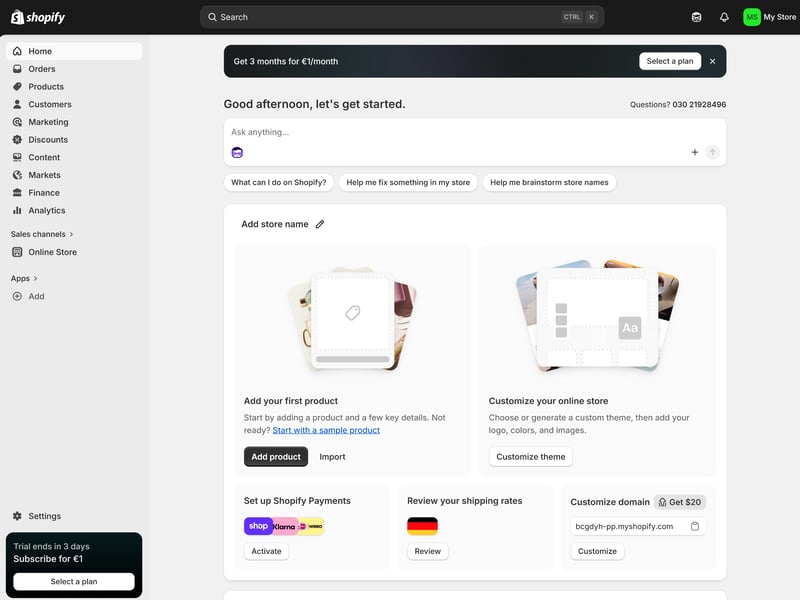
With an ecommerce website builder like Shopify, you can create a website without any coding skills.
The biggest advantage of your own online store is full control. You set the prices, design the site, and shape the customer experience. You also build a direct relationship with your buyers.
But that control comes with work. You’ll need to invest time and effort to build your store. And you’ll have to handle your own marketing. Without it, your website won’t get many visitors.
Online Marketplaces
If you’re not ready to build your own online store, you can sell on existing marketplaces instead. The biggest perk? Instant access to their audience. You don’t have to worry about web design or technical setup. In exchange, you give up some control, and the platform takes a cut of your sales.
The best marketplace for you depends on what you’re selling. Here are some of the most popular options:
Etsy: While Etsy is best known for handmade goods, digital downloads like templates, planners, and printables are also hugely popular.
Udemy: Sell your knowledge as video courses on Udemy, an online learning platform.
Gumroad: A versatile marketplace for digital products. Whether it’s software, ebooks, music, design assets, or Notion templates, Gumroad lets creators sell just about anything.
Amazon KDP: When it comes to ebooks, Amazon is hard to beat. With Kindle Direct Publishing (KDP), authors can publish their work directly and reach millions of potential readers.
Digistore24: A German platform for selling digital products, from software to ebooks to events. It also offers affiliate marketing tools.
Depositphotos: Photographers and designers can license their work on stock photo platforms like Depositphotos and sell to customers worldwide.
For Services: Freelance Platforms
If you sell digital services, check out freelance platforms like Upwork or Fiverr. These sites let you offer services in categories like design or copywriting, either by the hour or by the project.
The Best Ecommerce Website Builders for Digital Products
We tested 13 popular ecommerce platforms in our best ecommerce website builders comparison. Most were built with physical products in mind, but they work just as well for digital goods. Here are a few of our top picks:
Shopify: The Best All-Around Ecommerce Platform

Shopify is our top pick among ecommerce website builders. It works just as well for a small shop with a handful of products as it does for a large store with a big inventory and demanding needs.
Selling digital products on Shopify is easy. You’ll just need to install an extra app from the Shopify App Store so customers can download their purchases. The official (and free) "Digital Downloads" app works well, but plenty of third-party options exist too.
The maximum file size is 5 GB.
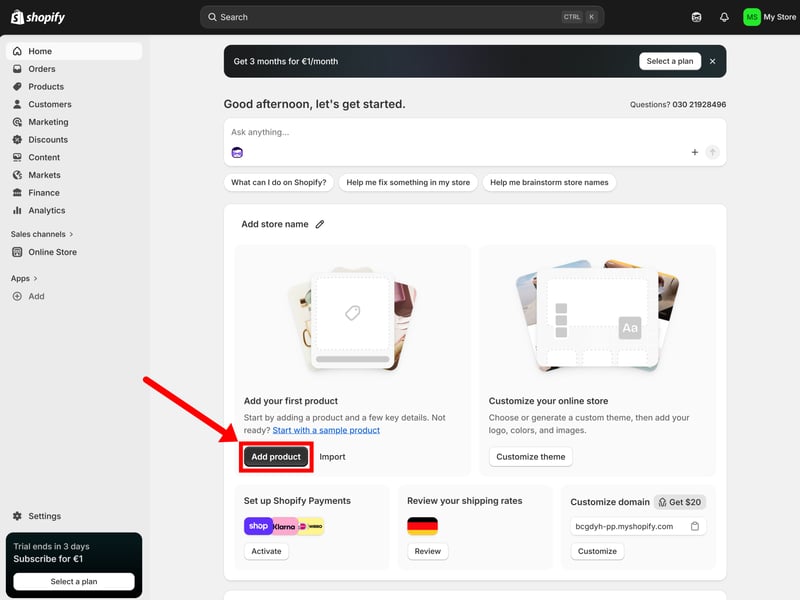
You can sell digital products on Shopify using apps from the Shopify App Store.
For a small shop selling only digital products, Shopify might feel like overkill, but it leaves plenty of room to grow.
WooCommerce: Ecommerce Plugin for WordPress

WooCommerce offers even more flexibility than Shopify. This free WordPress plugin turns any WordPress site into a full-fledged online store. Since you're not locked into a specific website builder, you can design your shop exactly the way you want.
Selling digital products is just as easy. In the product settings, check “Downloadable” under “Product data” and upload your files along with any download rules.
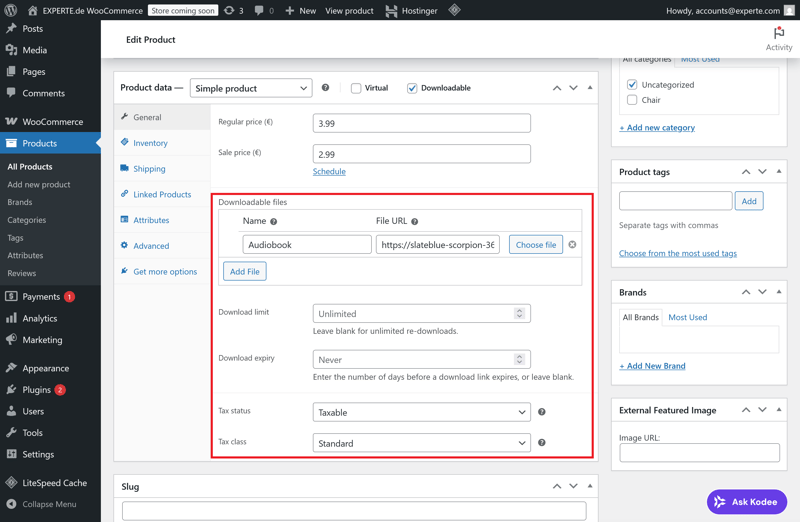
Digital products in WooCommerce.
Beyond its built-in features for digital products, WooCommerce offers a huge library of plugins to expand your shop’s capabilities.
Wix: Powerful Website Builder With Ecommerce Features

Wix isn’t a dedicated ecommerce platform like Shopify. It’s a website builder with ecommerce features, so it’s not as powerful or flexible as a specialized solution. But if you mainly want a website and plan to sell a few digital products on the side, Wix may be all you need.
Selling digital products on Wix is straightforward. In the product menu, you simply choose whether the item is physical or digital.
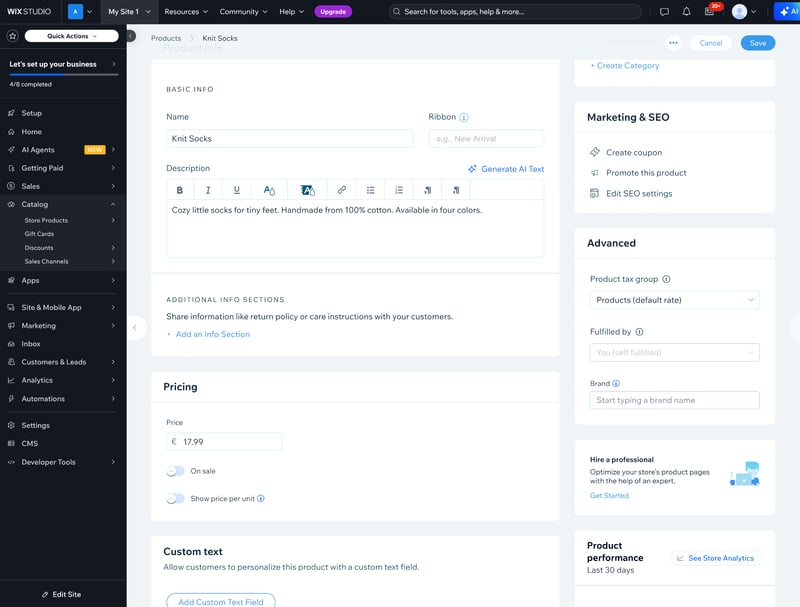
With Wix, you can sell both physical and digital products.
Wix supports multiple file formats for digital downloads:
Image files (up to 50 MB each): .jpg, .png, .gif
Audio files (up to 100 MB each): WAV, FLAC, M4A (Apple lossless), MP3
Documents (up to 1 GB each): .doc, .docx, .xls, .xlsx, .ppt, .pptx, .odt, .odp, .pdf, .epub
Zip files (up to 1 GB each): .zip
Alternatives
Those were our top three picks, but almost every platform in our comparison can handle digital products. Here’s the full ranking of ecommerce platforms, with links to our detailed reviews:


Key Takeaways: Selling Digital Products Is Easier Than Ever
Selling digital products offers clear advantages over physical goods. Overhead is low, profit margins are high, and you never worry about inventory. But competition is fierce: online, legal and illegal downloads are everywhere. Pricing digital goods can also be tricky.
Once you know what you want to sell, make sure you understand the tax rules. When in doubt, talk to an accountant. Then pick the right platform. Online marketplaces like Etsy, Gumroad, or Digistore24 work well, but your own website or online store gives you the most control.
Building an ecommerce site is easiest with a website builder or ecommerce website builder. Almost all of them support selling digital products.
Frequently Asked Questions
Digital products are non-physical goods sold online. Examples include ebooks, software, and music files.
Popular options include online courses, tutorials, ebooks, apps, stock media, and templates for presentations or website builders. But what really matters is quality and how easy your product is to find.
You can sell digital products on online marketplaces like Digistore24, Etsy, or Gumroad. Or you can set up your own website. Most ecommerce platforms, like Shopify, WooCommerce, or Wix, make selling digital products simple.
You’ll need to add sales tax or VAT to your digital products. For sales within your country, use your local tax rate. For sales to consumers in other EU countries, apply the VAT rate of the customer’s country. For business customers abroad, the reverse-charge mechanism applies, meaning the buyer handles the tax. To be safe, consult an accountant before you start selling.