Best WooCommerce Alternatives of 2026: 11 Ecommerce Website Builders Ranked


WooCommerce is a great ecommerce platform, but it's not the right fit for everyone. If you find WordPress and WooCommerce too much to handle, there are plenty of simpler alternatives. But which one should you choose?
We've rounded up the best WooCommerce alternatives and explain where they have the edge over WooCommerce (and where they don't).


What's Wrong With WooCommerce?
There's a good reason WooCommerce is so popular. It's powerful, flexible, and can handle almost any type of online store. That's why it came in second in our ranking of the best ecommerce platforms, just a few points behind Shopify. It's genuinely one of the best and most versatile ecommerce platforms on the market.
But it's not perfect, and it's certainly not the right choice for everyone. Here are some of its drawbacks:
Manual setup required
WooCommerce isn't a plug-and-play ecommerce website builder like Shopify. You need to arrange your own hosting and domain, then install WordPress and WooCommerce yourself.More ongoing maintenance
WooCommerce requires more hands-on management to keep things running. Updates, backups, security, and performance are all your responsibility.Many features require plugins
Because it's powered by WordPress, WooCommerce can do almost anything. But out of the box, the features are quite basic. Advanced functionality usually requires plugins or custom development.It helps to be tech-savvy
WooCommerce doesn't require programming skills, but it does help if you're comfortable with WordPress and the technical side of running a website.No built-in legal compliance
WooCommerce is designed for a global audience, so it doesn't automatically account for your country's legal requirements. Depending on where you sell, you may need additional plugins or customizations to make your store compliant.Costs can be hard to predict
WooCommerce itself is free and open source, but hosting, themes, plugins, and maintenance all cost money. Since everything is billed separately, your total costs might be harder to predict than with an all-in-one ecommerce platform.Limited support
Since it's free to use, WooCommerce doesn't come with dedicated customer support. If something goes wrong, you'll usually have to figure it out yourself.Negative user feedback
WooCommerce gets a lot of flak on review sites like Trustpilot. Users most often complain about limited support, the learning curve, and the cost of running a WooCommerce store.
If those drawbacks are deal-breakers for you, there are plenty of other ecommerce platforms to choose from. But which one is right for you?
The Best WooCommerce Alternatives
There's no single best WooCommerce alternative. It all comes down to what you need from your ecommerce platform. Here are four great options for different priorities:
Shopify: The best allrounder

Shopify is a hosted ecommerce platform that lets you build, run, and grow an online store without worrying about the technical side. Unlike WooCommerce, you don't have to manage your own hosting, keep your software up to date, or deal with security and maintenance. Shopify takes care of all of that for you.
There are plenty of hosted ecommerce platforms, but Shopify is one of the best. It combines powerful sales features with an easy-to-use website builder that works just as well for beginners as it does for larger, growing businesses.
Shopify might be a good WooCommerce alternative if you:
want to launch your store quickly
don’t want to deal with hosting, maintenance, or updates yourself
need a platform that can grow with your business
prefer an all-in-one solution that works out of the box
What does Shopify do better than WooCommerce?
As a hosted platform, Shopify is generally easier to use and requires much less maintenance. Many features that require plugins or manual setup in WooCommerce are already built in.
Less setup and maintenance
With Shopify, you don't have to manage your own hosting or worry about updates, security, and maintenance. Shopify handles the technical side for you.More built-in features
Many ecommerce features that require plugins in WooCommerce are already included with Shopify, from shipping and tax tools to discounts and product filtering.Simpler tax management
Shopify automates much of the tax setup, including VAT and many country-specific tax rules. With WooCommerce, you'll need additional plugins.Dedicated customer support
Shopify offers 24/7 support via live chat.
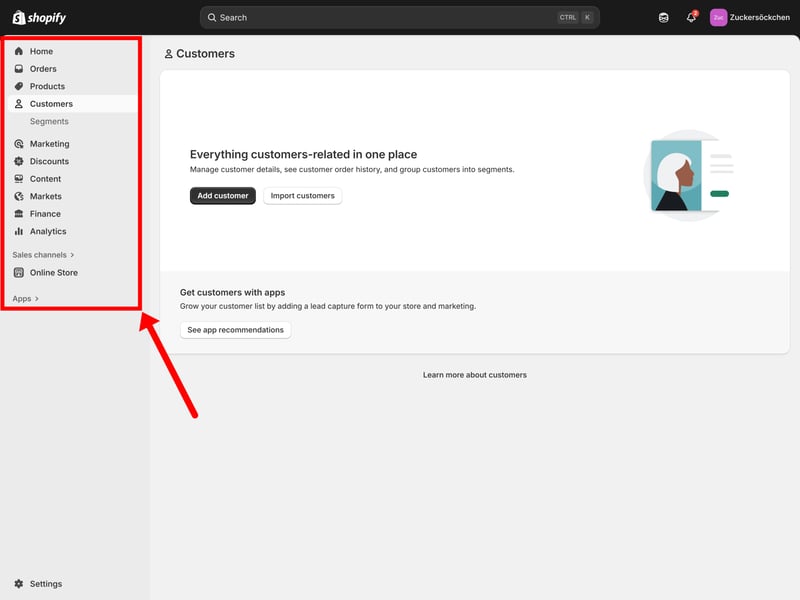
Shopify’s store dashboard.
Where Shopify falls short compared to WooCommerce
Shopify's all-in-one approach comes with a few trade-offs. Compared to WooCommerce, it offers less flexibility and control.
Less flexibility
WooCommerce is open source and can be customized in almost any way. Shopify is flexible too, but it's still a closed platform with limits you can't easily work around.Less design freedom
Shopify's page builder is easy to use, but deeper design changes often require editing code. With WooCommerce, you can choose from thousands of WordPress themes and many different page builders.Monthly subscription fees
WooCommerce itself is free, while Shopify charges a monthly subscription (which doesn't include the cost of themes, apps, and transaction fees).Vendor lock-in
With Shopify, you're tied to a single platform. If prices go up or features change, your only real option is to migrate your store elsewhere, which can be a major undertaking.
Wix: Versatile website builder for small stores

Wix isn't a dedicated ecommerce platform like WooCommerce, but a general-purpose website builder with built-in ecommerce features. It can't match the depth and flexibility of WooCommerce or Shopify, but it might be all you need if your ecommerce needs are fairly simple.
Wix might be a good WooCommerce alternative if you:
want a nice-looking website with a built-in online store
run a fairly simple online store
want to get online quickly without dealing with technical setup
care as much about your website as your online store
What does Wix do better than WooCommerce?
Wix is easier to set up and manage than WooCommerce. Many features that require plugins or manual setup in WooCommerce are built in, and its visual editor gives you much more freedom when designing your website.
All-in-one platform
Wix includes hosting, security, updates, and maintenance, so you don't have to manage the technical side of running your website.More built-in ways to sell
Wix supports physical and digital products, services, bookings, subscriptions, memberships, and more without relying on lots of third-party plugins.Better visual page builder
Wix's drag-and-drop editor makes it easy to customize almost every part of your website without writing code. To get a similar editing experience with WooCommerce, you'll need a page builder plugin.
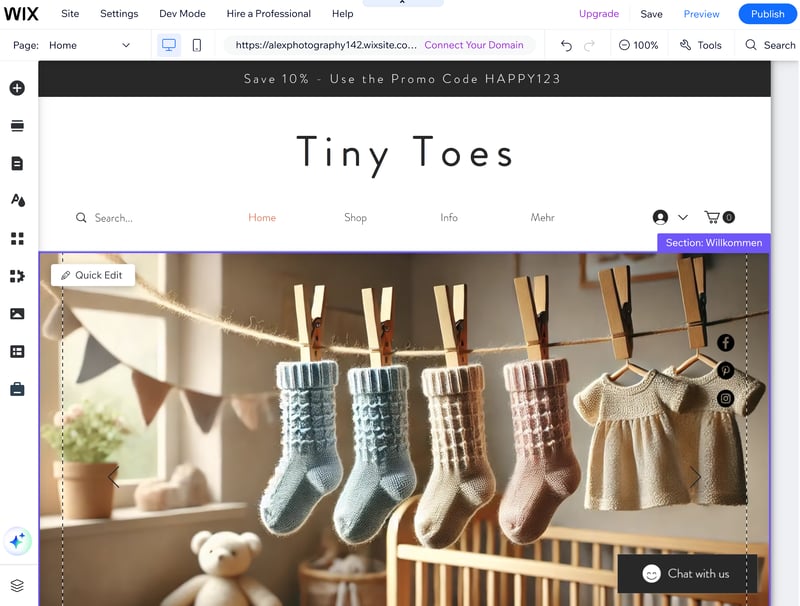
Wix has one of the best drag-and-drop editors on the market.
Where Wix falls short compared to WooCommerce
Wix is one of the better website builders out there, but it's still a website builder first and an ecommerce platform second. It lacks the deep flexibility of WooCommerce and wasn't really built to handle the demands of larger, more complex online stores.
Not for large or complex stores
Wix supports up to 50,000 products in theory, but in practice, it's best suited to smaller stores with simple setups and catalogs.Busy, complex editor
Wix might be more approachable for a non-tech audience, but there's still a steep learning curve. The UI is packed to the brim with features and settings, which can be overwhelming for beginners.Sluggish interface
Wix seems to struggle under the weight of all its features. The editor is often slow and unresponsive, which can make the design and editing process feel frustratingly clunky.
Ecwid: A simple way to add a store to an existing website

Ecwid is short for “ecommerce widget”, which sums up the platform’s USP: instead of rebuilding your whole website from scratch, you simply add Ecwid's online store to a website you already have. That's just one option, though: Ecwid also includes its own website builder if you're starting from scratch.
Ecwid might be a good WooCommerce alternative if you:
already have a website and just want to add an online store
don't want to rebuild or migrate your existing website
sell across multiple channels, such as social media or online marketplaces
want a simple ecommerce solution that's quick to set up
What does Ecwid do better than WooCommerce?
Besides working with almost any website, Ecwid is easier to use, easier to maintain, and includes more features out of the box than WooCommerce.
Modular approach
Ecwid integrates with WordPress, Wix, Squarespace, Joomla, and many other platforms. WooCommerce only works with WordPress.Built-in multichannel selling
Ecwid lets you sell through your website, social media, and online marketplaces without relying on lots of third-party plugins.Easy to use
Ecwid's dashboard is cleaner and easier to navigate than WooCommerce's WordPress-based backend. Ecwid's website builder offers a more intuitive editing experience than WordPress's standard editor.

Ecwid offers more than 70 templates for online shops.
Where Ecwid falls short compared to WooCommerce
Ecwid is easier to add to an existing website and much simpler to manage overall, but that simplicity comes at the cost of flexibility.
Less flexibility and customization
WooCommerce is open source, so you can customize almost every aspect of your store. Ecwid is much more restrictive, with fewer options for customization and third-party extensions.Limited design freedom
Ecwid's “Instant Site” builder is intuitive, but fairly restrictive. Instead of designing your store from scratch, you're mostly customizing predefined layouts.Product limits on cheaper plans
Ecwid's lower-tier plans are limited to just 10 or 100 products. If your catalog grows beyond that, you'll need to upgrade to a more expensive plan.
BigCommerce: Built for larger online stores

BigCommerce is a hosted ecommerce platform designed for larger stores and more demanding ecommerce projects. It's similar to Shopify, but comes with more features upfront.
BigCommerce might be a good WooCommerce alternative if you:
plan to run a larger or fast-growing store
sell internationally in multiple currencies
sell to both consumers and businesses (B2B)
want a hosted platform with advanced ecommerce features
What does BigCommerce do better than WooCommerce?
Like other hosted ecommerce platforms, BigCommerce takes care of the technical side for you. It also includes many advanced ecommerce features out of the box that often require plugins in WooCommerce.
Fully hosted platform
BigCommerce takes care of hosting, security, updates, backups, and performance, so there's very little technical maintenance.More built-in features
BigCommerce includes advanced features such as product filtering, B2B tools, and multi-currency support without relying on lots of third-party plugins.Dedicated customer support
BigCommerce offers direct support via live chat, email, and phone.
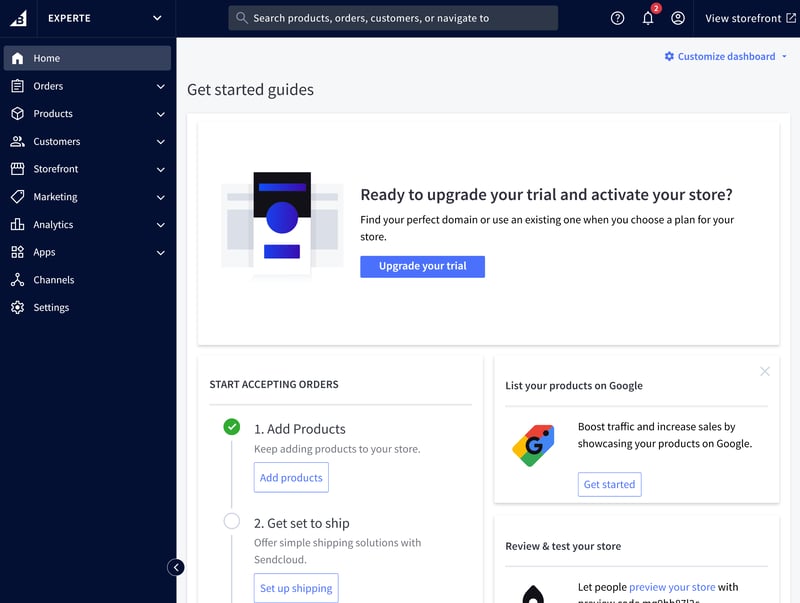
The BigCommerce admin dashboard.
Where BigCommerce falls short compared to WooCommerce
Because it’s a closed platform, BigCommerce lacks the "build-anything" flexibility of WooCommerce. At the same time, it isn’t quite as intuitive or beginner-friendly as other alternatives like Shopify.
Sales-based pricing
Once your annual sales exceed a certain threshold, you'll need to upgrade to a more expensive BigCommerce plan.Steeper learning curve
BigCommerce is accessible for non-developers, but it’s a bit more complex than other hosted platforms (like Shopify). Expect a bit of a learning curve.Rigid website builder
The page builder is decent, but lacks the flexibility of true drag-and-drop website editors. Making advanced design changes tends to require coding.Vendor lock-in
Just like with Shopify, BigCommerce is a hosted service, which means you don’t truly own your site. If BigCommerce raises prices or removes a feature you rely on, there's not much you can do (except leave).
Alternatives
None of these sound right for you? Maybe another platform is a better fit. Here's the full ranking of the ecommerce website builders we've tested, with links to in-depth reviews for each one:


Note: We've only included platforms we've tested ourselves, but there are plenty of other WooCommerce alternatives worth considering.
SureCart might be a good option if you already use WordPress and want a lighter, hosted alternative to WooCommerce.
Easy Digital Downloads is a streamlined WordPress plugin designed primarily for selling digital products.
If you're running a large or complex ecommerce business, enterprise platforms like Adobe Commerce or Shopware might be worth considering.
Final Thoughts: Which WooCommerce Alternative Is Right for You?
WooCommerce is incredibly flexible, but that freedom is a double-edged sword. While you get total control, you’re also on the hook for hosting, security, and maintenance. With hosted ecommerce platforms, that's all taken care of for you.
The “right” alternative really depends on why you’re ruling out WooCommerce in the first place:
If you want a hands-off, all-in-one solution, Shopify is the best choice: it's the best all-rounder for most sellers.
If your ecommerce needs are fairly simple and your website is just as important as your store, a website builder like Wix might be all you need.
If you already have a website and simply want to add ecommerce functionality, Ecwid is worth a look.
If you like the flexibility of WooCommerce but not the technical maintenance, it might be worth looking at managed WordPress or WooCommerce hosting before switching platforms altogether. Many providers take care of updates, backups, security, and performance for you, while you still get all the flexibility WooCommerce has to offer.