What Is Link Building? Definition, Methods, and Best Practices for 2026

Imagine two websites with equally strong content. One ranks on page one, while the other sits on page three. Often, it’s not just the content that determines where you rank in search results. Links from trusted websites play a big role too. That’s what link building is all about.
Link building means actively getting backlinks: links from other websites that point to yours. The more reputable websites link to you, the more Google is likely to view your content as trustworthy and relevant. We’ll break down what makes a good backlink, which link building methods work best, and how Google views the practice.
Link building means actively getting backlinks, which are links from other websites to your own.
There are generally three ways to get backlinks: earning them naturally through great content, building them manually, or buying them. Buying links, however, violates Google’s guidelines.
Not all backlinks are equal. What matters most is relevance, the authority of the linking website, and a natural fit within the content.
Google separates link building into allowed (“white hat”) and banned (“black hat”) methods. Manipulative tactics can lead to ranking drops or other penalties.
What Is Link Building?
Link building is the process of earning or acquiring backlinks from other websites, whether through guest posts, digital PR, or partnerships.
This differs from organic link earning, where backlinks happen naturally because other websites choose to link to your content. Great content is the foundation. Active link building helps you amplify those results.
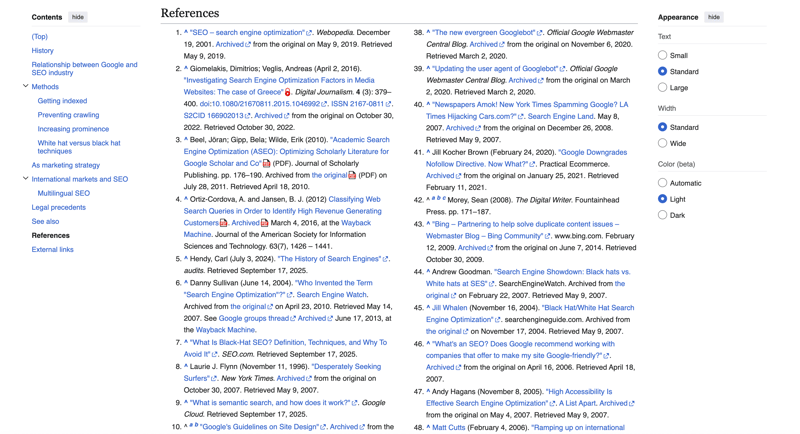
Take Wikipedia, for example: Here, backlinks serve as sources for readers and authority signals for search engines.

What Makes a Good Backlink?
Not every backlink helps your ranking, and some can actually hurt it. Before you start building links, you need to know what makes a backlink valuable in Google's eyes.
A good backlink should have three key qualities: it comes from …
a high-quality website.
a relevant topic or industry.
a website with strong authority.
Let’s break down these three qualities in more detail:
High-quality websites
In the past, the rule was simple: the more links, the better your ranking. That’s no longer true. Google evaluates whether a website appears trustworthy and authoritative. A link from a respected industry website, a major news outlet, or a well-run blog carries far more weight than one from a spammy directory or a low-quality page.
The takeaway? Quality beats quantity. A single backlink from a trusted source is usually worth more than dozens from irrelevant or low-quality pages. Avoid building too many links in a short period, as Google may interpret an unnatural link velocity as a sign of manipulative link building.
Topical relevance
A backlink is more powerful when it comes from a website in your niche. If a nutrition blog links to your guide on healthy eating, Google sees a natural, logical connection. A link from a completely unrelated source, like a travel blog, doesn’t carry the same weight. In fact, it might even look suspicious, as if it were forced or paid for.
That’s why your link-building strategy should focus on websites that fit your content. Don’t just take any link that comes your way. Focus on relevance over quantity.
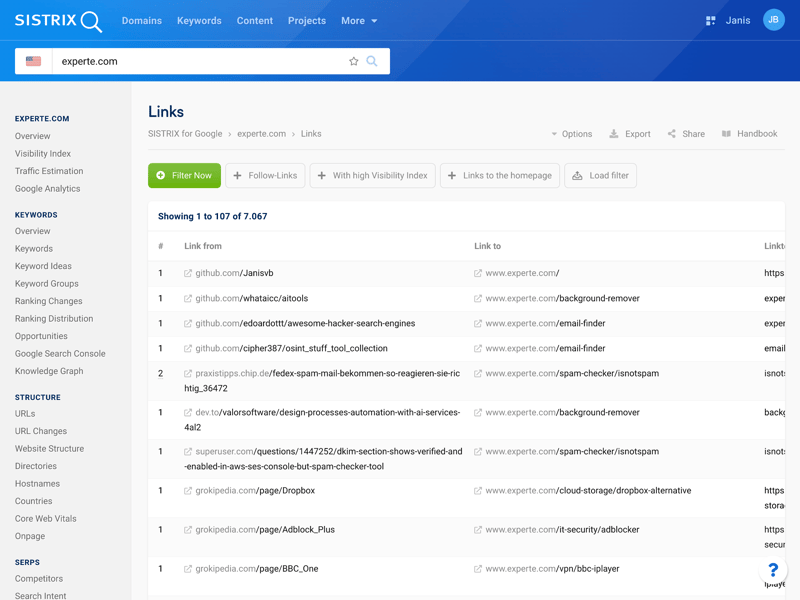
The Links view in an SEO tool like Sistrix shows which domains link to which pages and how many backlinks each one has.
Authority of the linking domain
How trustworthy and well-known a domain is affects how much weight a backlink carries. Metrics like Ahrefs’ Domain Rating or Semrush’s Authority Score can help you estimate a domain's authority. These aren’t official Google metrics, but they’re useful for comparing domains.
High authority alone isn’t enough, though. A backlink is most valuable when it combines authority, topic relevance, and natural placement within the text.
Link Building Methods: What Are Your Options?
There are three main ways to get backlinks: earn them organically, build them strategically, or buy them. We don’t recommend the last option. Here’s why:
Earning backlinks means creating content that others want to link to naturally. Think original studies, infographics, guides, or useful online tools. It takes time, but it’s the foundation for long-term success.
Building backlinks is the active approach. You identify relevant websites and reach out through guest posts, digital PR, broken link building, or partnerships. It’s more predictable, but it requires ongoing effort for research and outreach.
Buying backlinks is the riskiest option. Google considers paid links that only exist to manipulate rankings a violation of its guidelines. Sponsored links should be properly disclosed using attributes such as rel="sponsored" (or rel="nofollow," where appropriate).
We’ve broken down the most important link building methods in this article:

Link building takes time and experience, especially when it comes to outreach, content creation, and evaluating domains. If your team lacks the resources or expertise, hiring a specialized link building agency can be a practical option.
Reputable agencies are upfront about their methods and focus on sustainable, topic-relevant links rather than mass link schemes. They’ll tell you exactly which domains they’re targeting and avoid link networks or other tactics that violate Google’s guidelines.
How Do I Measure Link Building Success?
To succeed at link building, you need to know your backlink profile inside and out and track it over time. Which websites link to you? How strong are those links? A dedicated SEO tool is the most reliable way to answer these questions.
Why You Need SEO Tools
Tools like Ahrefs or Semrush constantly scan the web and provide key data: the number of referring domains, their authority, the anchor text used, and whether a link is marked as “dofollow” or “nofollow.”
We’ve put the most popular SEO tools to the test. Here are our top picks:


Understanding Your Backlink Profile: The Backlink Audit
A backlink audit helps you analyze your existing link profile. You’ll spot potentially harmful links and see which ones are contributing positively to your SEO performance.
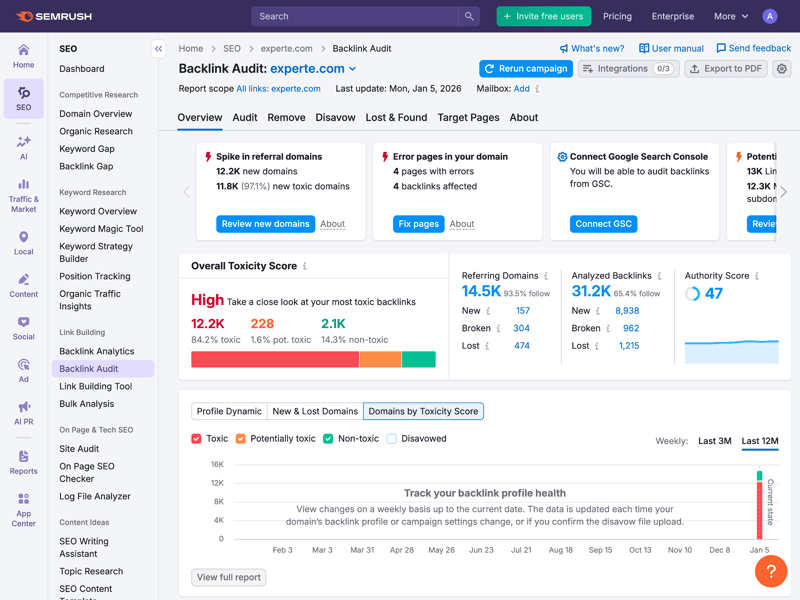
Semrush’s Backlink Audit view: color-coded indicators, like the Toxicity Score, help you quickly make sense of all the data.
Regular audits are especially useful if you’re actively building links. They help you spot early on whether new backlinks are actually high-quality.
Comparing Yourself to the Competition: Link Gap Analysis
A link gap analysis shows you which domains link to your competitors’ websites but not to yours. It’s a great way to identify promising new link sources. If a domain already links to several competitors, they may also be willing to link to your website.
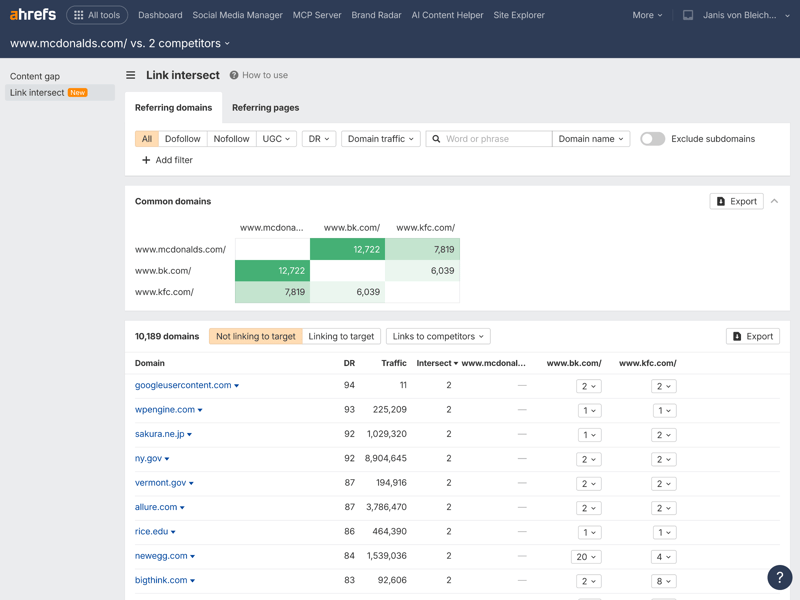
Ahrefs’ “Link Intersect” view lets you compare your domain directly with competitors.
What Does Google Think About Link Building?
Google allows link building when it follows its Search Essentials guidelines. The distinction between “white hat” and “black hat” SEO best illustrates where the line falls between acceptable and unacceptable practices.
White-hat link building follows Google’s guidelines. You earn links through high-quality content, genuine relationships, and legitimate methods like guest posts or digital PR. These links exist because they provide real value to the readers of the linking website.
Black-hat link building violates Google’s guidelines. This includes buying unmarked links, joining link networks (private blog networks, or PBNs), or generating mass links through automated tools on link farms. These tactics exist solely to manipulate search rankings and offer no real benefit to the linking website or its readers.
Link Spam and Its Consequences
Google treats link building practices that violate its guidelines as link spam. If it catches a website doing this, the consequences range from devaluing individual links to a manual penalty for the entire domain.
In severe cases, a website can lose most of its visibility in search results. With individual harmful backlinks from other pages, Google often ignores these links rather than penalizing your website directly.
That’s why you should carefully check which methods an agency plans to use to build your backlinks. When in doubt, remember: if a link exists solely to influence rankings and offers no value to anyone else, it’s a red flag.
Final Thoughts: What Is Link Building and Why Does It Matter?
Good backlinks don’t happen accidentally. If you want to stay visible in search results over the long term, treat link building as a core part of your SEO strategy. High-quality backlinks help Google better judge your website’s trustworthiness and relevance.
What matters most isn’t the number of backlinks but their quality. Focus on earning high-quality, relevant backlinks consistently, review your backlink profile regularly, and avoid manipulative tactics.