How to Generate Backlinks in 2026: 7 Content Strategies That Work


Some websites seem to climb to the top of Google without relying on paid ads or large-scale outreach campaigns. Their secret? Other sites link to them naturally. These digital recommendations are called backlinks, and they’re one of the strongest signals Google uses to rank content.
Instead of relying solely on active link-building efforts, you can earn them with content so good, useful, or unique that other websites link to it voluntarily. We’ll show you how to generate backlinks organically and which content formats work best.
What Does Earning Backlinks Mean?
Earning backlinks means attracting links through valuable content rather than direct outreach. Instead of reaching out to other sites, you focus on content so relevant, helpful, or unique that others link to it on their own.
Unlike active link building, where you build backlinks intentionally, the focus here is entirely on content quality. When you provide real value, you’ll naturally get cited as a source more often.
Linkable Assets: What Makes Content Worth Linking To?
To get other websites to link to you voluntarily, you need unique content, often called “assets.” A linkable asset is content designed to attract citations and backlinks naturally. But what makes content so irresistible that others want to link to it?
The Skyscraper Technique: Be Better Than the Best
One well-known approach is the Skyscraper Technique. The idea is simple: find the best existing content on your topic, then make it even better. Once you do, you’re in a much stronger position to attract backlinks naturally.
Three things matter most when creating skyscraper content:
Data and research findings
Journalists, bloggers, and businesses love backing up their claims with solid facts. If you provide that data, they’ll link to your site as the source. Original studies, surveys, or exclusive data analysis turn you into a primary source and boost your chances of earning high-quality backlinks.Practical value
Content that solves a real problem for your audience keeps earning links for years. Think step-by-step guides, online calculators, customizable templates, or downloadable checklists. These resources stay relevant and keep attracting backlinks over time.Visual and emotional storytelling
People share and link to content that grabs them visually and emotionally. Stories, infographics, videos, or interactive charts create a stronger connection than plain text. They make complex topics easier to understand, more memorable, and more likely to be cited, especially across social media, blogs, and other online publications.
A great example is The New York Times’ “Dialect Quiz,” an interactive feature that maps regional speech patterns across the U.S. Its combination of personalized results and shareable outcomes made it one of the most heavily linked pieces the Times had published in years.
7 Content Formats That Naturally Attract Backlinks
Some content formats earn backlinks on their own and have worked as link magnets for years. Which format works best depends on your expertise, resources, and audience, but these seven approaches work in almost any industry:
Studies and surveys
Run your own surveys, survey customers, prospects, or industry professionals, or turn internal data into a full industry report. Your content becomes an exclusive source for anyone who needs real numbers, charts, or insights. Journalists, blogs, and businesses will cite your findings to back up their own claims.
Example: Pew Research Center regularly publishes studies on internet, technology, and media trends that are freely available and widely cited by journalists and industry blogs.
Data-driven statistics
You don’t always need to collect your own data. Sometimes a fresh look at publicly available data uncovers surprising insights. Well-presented data and clear insights can become powerful link-building assets.
For your own analysis, you can tap into plenty of trusted sources, such as:
Academic databases (including Google Scholar)
Infographics and Other Visual Content
Complex data and study results are much easier to grasp as an infographic. Clear, practical visuals, charts, or diagrams turn numbers and statistics into something people are more likely to engage with and share.
Make your infographic easy to share by providing an embed code, and don’t forget to include a source link back to you. Add a watermark or match the design to your brand's colors and fonts so your work is instantly recognizable.
Example: HubSpot regularly uses infographics to break down complex marketing and sales topics. Each graphic follows HubSpot’s signature style: recognizable colors, clean layouts, and concise information.
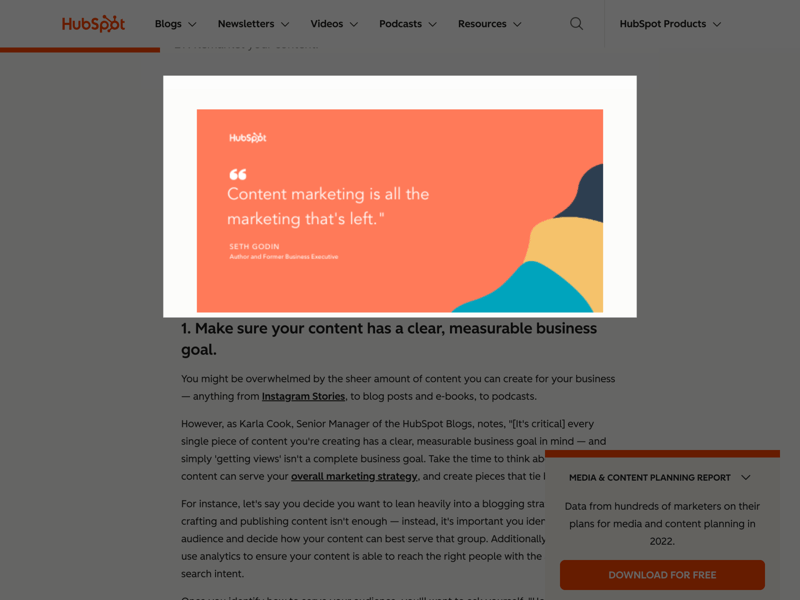
HubSpot’s blog frequently uses infographics that attract backlinks.
Online Tools and Calculators
Free tools that solve real problems are backlink magnets. Whether it’s a calculator, quiz, or browser extension, a genuinely useful tool gets recommended and linked to across countless articles, forums, and blog posts.
Example: A great example in action is Ahrefs, which offers a suite of free SEO tools—including a backlink checker, keyword generator, and SERP checker—that consistently attract links from SEO blogs, educational resources, and industry websites worldwide.
Ultimate Guides and Whitepapers
An “Ultimate Guide” aims to answer virtually every important question about a topic. Packed with tutorials, checklists, and tips, it covers everything you need to know.
A great example is Moz’s Whiteboard Friday series—weekly video tutorials that break down complex SEO concepts and consistently earn links from marketing blogs and industry publications.
Whitepapers work much the same way but with a sharper focus. Instead of covering a broad topic, they dig deep into a specific problem, using data, facts, and arguments to support a particular solution or perspective.
Example: McKinsey & Company regularly publishes whitepapers and industry reports on topics ranging from AI to supply chain disruption—and consistently earns high-authority backlinks from business publications.
Interactive Content (Quizzes, Tests, and More)
Quizzes blend knowledge, entertainment, and interaction, which makes them highly engaging and shareable. They encourage users to engage, offer personalized value, and often inspire people to share their results on social media.
Example: “16 Personalities” helps users learn more about themselves with its famous online personality test. The playful format keeps users engaged while introducing them to the company and its brand.
Opinion Pieces and Interviews
A sharp opinion piece or an in-depth interview with a well-known industry expert can spark conversations and provide a foundation for arguments and quotes. If you take a bold but well-reasoned stance, others will reference it, either to support their own views or to challenge yours.
Either way, you’ll gain visibility and a valuable backlink. This kind of content positions you or your company as a thought leader, someone whose opinions carry weight and shape industry discussions.
Example: Professor Scott Galloway regularly publishes bold predictions and commentary on business, technology, and economic trends that journalists and industry commentators frequently cite as a basis for their own work.
Content Seeding: The First Step to Generating Backlinks
In theory, once you publish strong content, there’s not much more to do. The idea behind generating backlinks is that other websites will discover and link to your content on their own.
But you don’t have to sit back and wait. Even great content needs initial exposure before it can gain traction. That’s called “seeding.” The goal is to get your content in front of the right audience, including potential linkers. Here’s how:
Use Your Existing Channels
Your existing channels are the easiest way to give new content its first boost:
Website and blog: Feature the content prominently on your homepage.
Newsletter: Let your subscribers know about your new resource.
Social media: Share the content across all your company’s relevant platforms.
Tap Into Relevant Communities
To build organic reach, go where your audience already hangs out. On forums like Reddit or Quora, you can share your content as a well-researched, helpful answer to a relevant question and demonstrate your expertise.
The same goes for LinkedIn and Facebook groups. Obvious ads rarely work, so position your content as a useful resource in ongoing discussions instead. Provide real value and become a trusted member of the community.
Run Social Media Ads
A small paid boost, like a social media ad, can help generate initial visibility and traffic and give your content the push it needs. That’s especially important for new or lesser-known websites.
All Content Seeding Options at a Glance
The table below shows the best channels for distributing your content to reach the most people and attract potential backlink sources:
Channel & Method | Action | Benefit | Best Practice |
|---|---|---|---|
Website/Blog | Add a banner in the header or a teaser section on the homepage | Maximum visibility for existing visitors | Include a clear call-to-action (CTA) to boost clicks. |
Newsletter | Send a dedicated email highlighting the content’s value | Direct access to your most loyal and engaged audience | Segment your email list. Only send it to those who’ll find it relevant. |
Social Media (Organic) | Tailor posts for each platform and audience | Likes, shares, and comments increase organic reach and signal relevance | Ask team members to share the post through their professional social profiles. |
Social Media (Paid Boost) | Use ad spend to target specific audiences with individual posts | Gives your content an algorithmic boost and helps gather data | Create an audience of people who visited your website in the last 90 days (retargeting). |
Online Forums | Provide well-researched answers to open questions or discussions | Establish yourself as an expert and drive targeted traffic | Engage in the discussion to become an authentic member of the community. |
Communities | Share content as a valuable resource in a relevant group | Reach new audience segments | Ask admins beforehand if it’s okay to share your helpful content. |
For the best results, combine several of these approaches to give your new linkable asset the biggest possible boost. A simple checklist keeps you organized and makes sure you don’t miss any key channels:
Alternatives to Earning Backlinks
Want more control over your link profile? If you prefer a more hands-on approach, you can combine organic strategies with active link building. This involves reaching out to relevant websites, building partnerships, or publishing guest posts to accelerate your growth:
Key Takeaways: Why Great Content Is Your Best Link-Building Strategy
At first glance, earning backlinks organically might seem counterintuitive. Why pour time, effort, and expertise into content you give away for free? Because it pays off in the long run. Quality content becomes a lasting asset, earning backlinks over time and lifting your Google ranking.
The trick is to create content that truly helps your audience. Don’t chase links. Build something so valuable that the links come to you.