How to Build Backlinks: 5 Proven Ways to Build High-Quality Backlinks


Great content doesn’t drive results if no one sees it. To get search engines to rank your site, you need more than just high-quality content—you need trust. One of the best ways to build that trust is through high-quality backlinks from reputable websites.
Building these links, known as link building, is one of the most effective ways to grow your organic reach over time. Here are five proven strategies to help you do it right.
What Is Link Building—and Why Are Backlinks So Important?
Backlinks are links from other websites pointing to yours. Search engines view them as votes of confidence—proof that your content is valuable, relevant, and trustworthy. The more high-quality backlinks you have, the more authority your site gains, and the better your chances of ranking on page one.
Link building is the process of intentionally acquiring high-quality backlinks. You take deliberate steps to secure quality backlinks through guest posts, partnerships, PR efforts, or targeted outreach campaigns.
There’s also a passive approach called earning backlinks: This happens naturally when other sites reference your content on their own because they find it highly valuable. This article focuses on active link building: systematically securing backlinks through deliberate, targeted efforts.
The Key to Link Building: Outreach
One of the most important steps in building high-quality backlinks is outreach—the process of reaching out to other website editors and owners. How well you execute this step determines the success of almost every method we’ll cover.
A generic mass email will likely be ignored or deleted without a second thought. But a short, relevant, and highly personalized message can open doors and build lasting professional relationships.
Successful outreach isn’t about luck; it’s a skill. And it comes down to three core principles: thorough research, personalization, and a respectful, collaborative tone.
Research
Find the right contact person and their personal email address. Generic inboxes like “info@” or “contact@” rarely get results.Personalized Email
Keep it brief, address the recipient by their first name, and show that you’ve actually read their content. Focus on the value you're providing to the recipient and their audience, not on what you want in return.Follow-Up
A single, friendly follow-up after about a week is perfectly fine and often necessary. Anything more than that can quickly come off as pushy or annoying.
Examples: Good vs. Bad Outreach
Here’s an example of a bad outreach email. It’s generic, self-centered, and clearly sent to a massive list. It’s no surprise that emails like this are immediately deleted:
To: info@financial-advice.com
Subject: Link Building PartnershipDear Webmaster,
I’m the SEO manager for a finance website and came across your site. We recently published a new article on sustainable investing and want to improve our ranking.
Please add a link to our article on your site.
In return, we can link back to you. This will help both of our SEO efforts.
Please let me know by the end of the week.
Best regards,
This next message is personalized, references specific content, and clearly highlights the value for the recipient’s audience. This approach significantly boosts the chances of a positive response:
To: sarah.johnson@financial-advice.com
Subject: Loved your article on common ETF mistakesHi Sarah,
I recently came across your article on common ETF mistakes for beginners. I especially appreciated your point on the lack of diversification—most articles in this niche don’t explain it nearly as clearly as you did.
While reading, it occurred to me that your readers might find a follow-up resource on sustainability really helpful, as many beginners are looking for ethical investment options.
We recently published a comprehensive guide that details how to build a sustainable portfolio and spot greenwashing.
If you think this guide would add value for your readers, would you consider linking to it in your article?
No pressure at all, of course—only if you think it’s a natural fit. Either way, keep up the great work, and I look forward to your next posts!
Best regards,
By the way, to find the right contact’s email, you can use the EXPERTE.com Email Finder.
5 Ways to Build Backlinks Actively
With a solid outreach strategy in place, it’s time to put it into action. These five methods will show you how to turn professional contacts into real, high-quality backlinks—sustainably, ethically, and in a way that benefits everyone involved.
Guest Posts: Showcase Your Expertise
A guest post is an article you write for another website in your niche. You contribute original, high-quality content, and in return, you get credit as the author, typically along with a contextual backlink to your site. This boosts your visibility and helps position you as an expert in your field.
How to pitch and land a guest post:
- 1.
Find the right platforms
Look for blogs, online magazines, or company blogs in your niche that have an engaged audience.Examples: TechCrunch (tech and startup news), HubSpot Blog (marketing and business), and Search Engine Journal (SEO and digital marketing).
- 2.
Pitch valuable topics
Send the editors two or three unpublished topic ideas that would resonate with their specific audience. - 3.
Write the post
Focus on quality, clarity, and depth. Include relevant links where they genuinely add value for readers. - 4.
Promote the article after it’s published
Share it on your own channels, like social media or email marketing. This shows goodwill and helps both sites reach a wider audience.
Fix Broken Links: Earn Backlinks by Helping Out
The internet is full of broken links (also called dead links). These point to pages that no longer exist, resulting in a 404 error.
For website owners, broken links hurt the user experience. For you, they’re an opportunity. By offering a high-quality replacement from your own site, both sides get value: the site owner gets to clean up their content, and you earn a high-quality backlink.
Here’s how to do it:
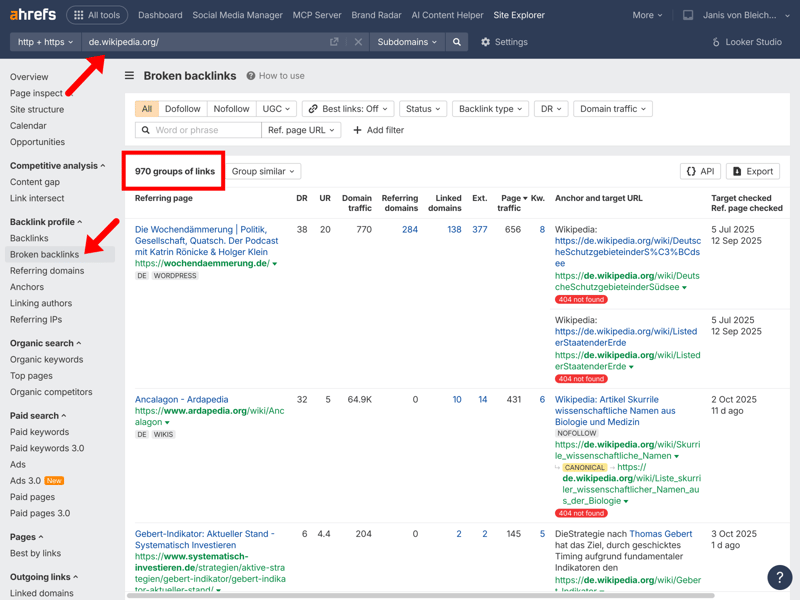
Example of a broken link analysis for Wikipedia’s domain
Turn Mentions Into Backlinks
Many brands get mentioned online in articles, forums, or blog posts without a link back to their website. These unlinked mentions are among the easiest backlink opportunities to pursue.
This method is also called “link reclamation,” and it works exceptionally well for established brands or businesses with an active online presence.
Here’s how to do it:
- 1.
Search the web systematically for mentions of your brand. Tools like Google Alerts (free), Ahrefs, or Semrush can track this automatically.
- 2.
Identify high-quality articles that mention your brand name but do not link to your website.
- 3.
Reach out to the authors, thank them for the mention, and politely ask if they’d consider adding a link so their readers can easily find you.
In Ahrefs, you can easily track these mentions using Web Explorer or by setting up Alerts. If you want to monitor your broader visibility across AI search and social media, you can also use their newer Brand Radar tool. This lets you monitor your brand, competitors, and broader industry trends in one place.
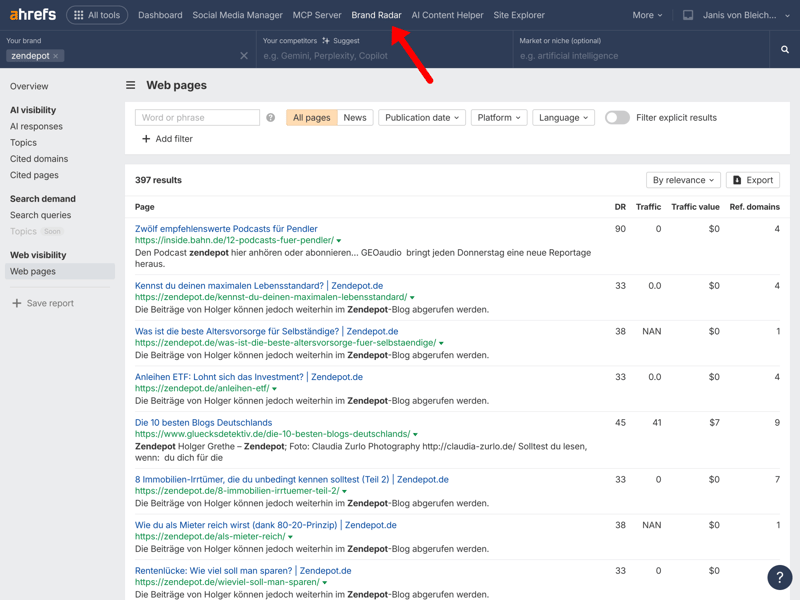
Now you can review all 397 results and ask for links where they’re missing.
Digital PR: Get Your Content Into the Media
Digital PR combines media outreach, content marketing, and SEO. The goal is to get journalists, editors, and online publications to cover your story and link back to your website.
This does more than just boost your immediate reach. Earning backlinks from highly trusted news sources is one of the most powerful ways to build domain authority.
PR platforms connect businesses with media outlets, boosting your content’s visibility and improving your chances of earning high-quality backlinks from reputable sources. Here are a few examples:
Connectively (formerly HARO/Help a Reporter Out) or Cision Connects
These match journalist requests with expert sources.PR Newswire
It’s a leading distribution platform for press releases to media outlets.BuzzSumo
A powerful research platform for discovering trending content and identifying relevant journalists.
Two approaches work especially well for digital PR: data-driven articles (using original studies, surveys, or internal data to share exclusive insights) and expert positioning (putting you in the spotlight as an interview source for fresh quotes).
Here’s how to get backlinks from journalists and media outlets:
- 1.
Create newsworthy content
Think about what would actually interest journalists and their audience. Focus on what’s new, surprising, or highly actionable.This could be a study based on your company’s internal data, a consumer survey, or an original expert take on a current trend. The key is to offer something beyond promotional content.
- 2.
Find the right journalists
Look for reporters who regularly cover your specific topic, or respond directly to active media requests on platforms like Connectively. - 3.
Pitch your story
Keep your pitch brief, explain why it’s valuable for their audience, and offer supporting assets (such as exclusive data, graphics, or quotes).
Strategic Partnerships and Collaborations
Building relationships with complementary businesses in your niche. For example, a specialized marketing agency might partner with a design agency. They can then mention and link to each other’s resources in relevant content.
Here’s how to do it:
- 1.
Look for businesses that target a similar audience but aren’t direct competitors.
- 2.
Propose a specific, mutually beneficial collaboration idea.
- 3.
Place the link in context, whether on your partner’s site, in a joint blog post, or in a webinar announcement.
The table below covers other ways to build backlinks through strategic partnerships, showing different collaboration options and their potential for earning links:
Strategy | Link Potential |
|---|---|
Co-Marketing Partnerships | Link to your partner’s content where it naturally adds value to your readers, and they’ll do the same for you on relevant topics. |
Joint project | Publish a co-branded study, ebook, or webinar, and link to each other on the promotional pages. |
Testimonials (Customers/Providers) | Offer a positive quote to a company whose product or service you use. Many businesses will happily link back to their customers’ sites in their testimonial section. |
Final Verdict: Link Building Is Part Strategy, Part Relationship Building
Successful link building happens when smart outreach meets the right strategies. You’ll get the best results by working methodically and building genuine, long-term relationships with other website owners.
Don’t just look at backlinks as a technical signal for Google. Think of them as the natural byproduct of a mutually beneficial partnership.